Reef Stories

Lionfish & Co.
Stingers, Stonefish, Scorpionfish
Lionfish & their poisonous relatives
Fish Index
Fish
Sharks & Rays
Anenome Fish
Anthias
Angelfish
Batfish
Barracuda & Travallies
Box-, File-& Pufferfiish
Blennies
Butterflyfish
Cardinalfish
Dartfish
Dragonets
Dottybacks
Eels
Flatfish
Frogfish
Gobies
Ghost Pipefish
Hawkfish
Jawfish
Sand-Divers
Scorpionfish
Seahorses
Snappers
Surgeonfish
Sweetlips
Triggerfish
Wrasse
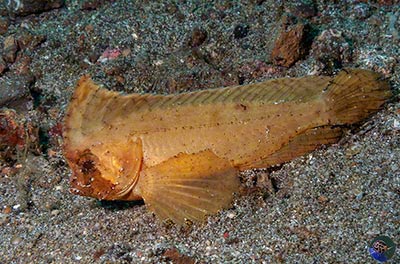
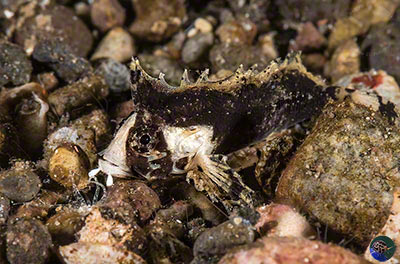
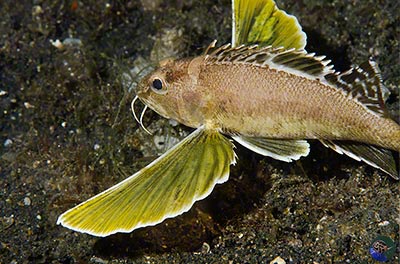
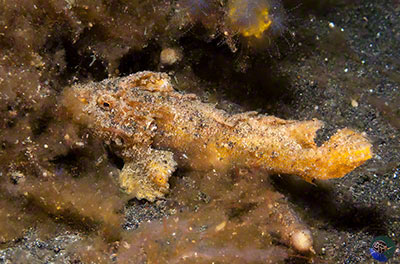
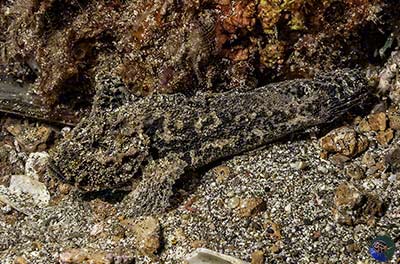
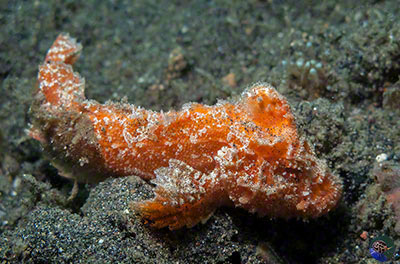
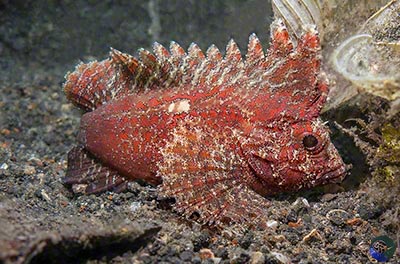
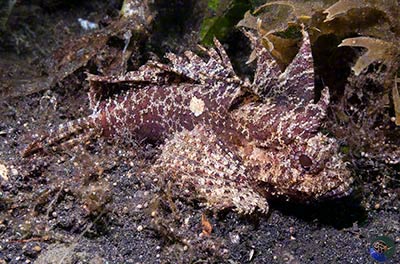
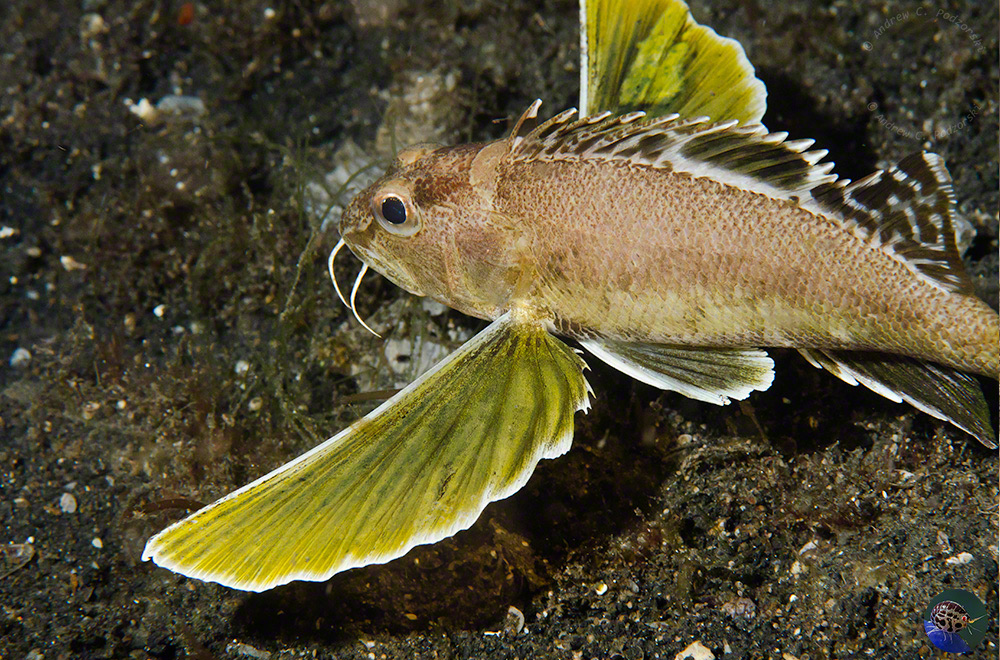
This group of fish all have poisonous spines that illicit pain, excruciating agony, and in some species, can result death. They are not aggressive however, and spine punctures are usually the result of carelessness or coming in contact with them due to their exceptionally good camouflage.
Rhinopias and lionfish both belong to the scorpionfish group, but because of general interest in these genera, they are given their own accounts here.
Suchen
Zeige Ergebnisse für
1 Ergebnis
Ergebnisse
nichts gefunden
Gängige Wörter werden weitgehend ignoriert
1 Suchbegriff zu kurz
Sollte 3 Zeichen oder mehr sein
Rhinopias
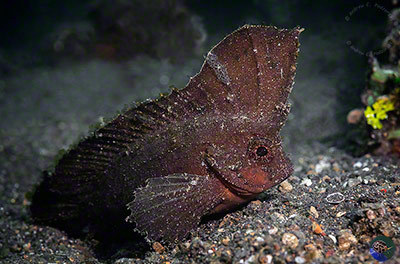
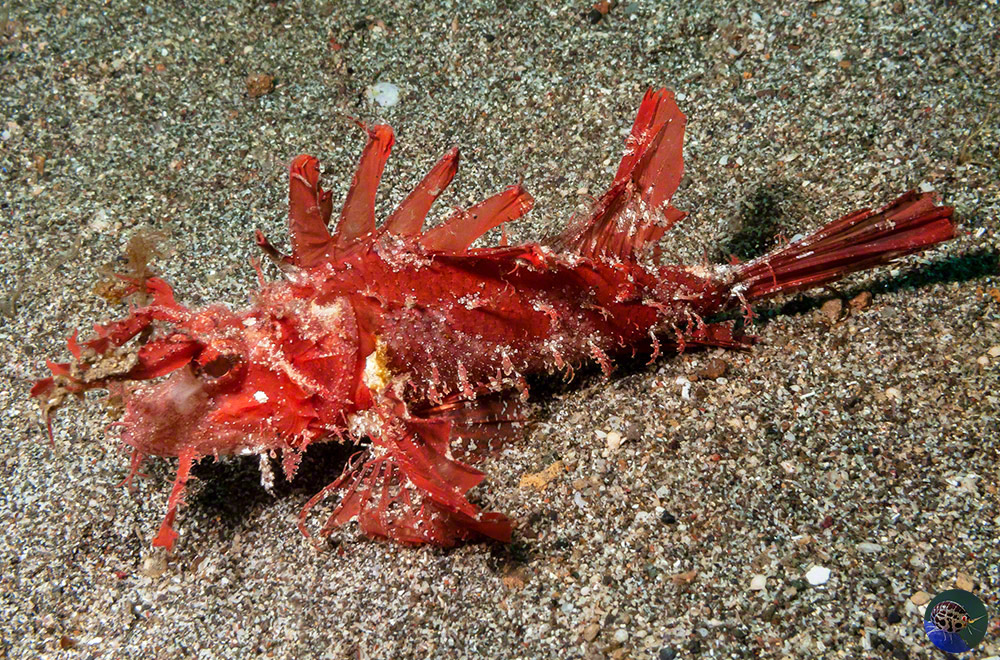
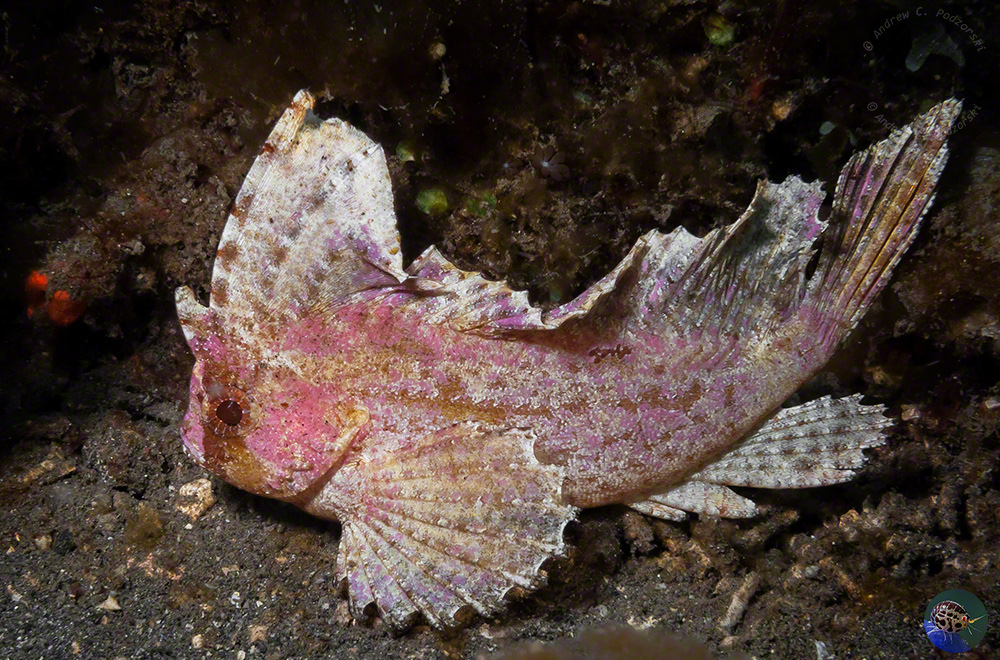
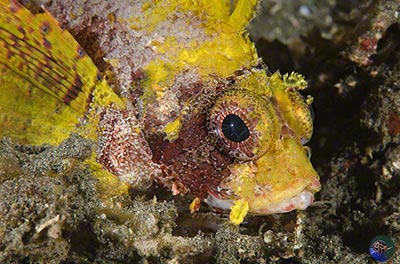
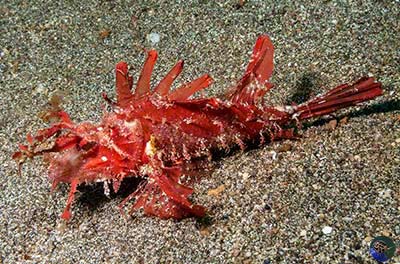
This spectacular genus belongs to the scorpionfish. They are very rarely seen partly due to their excellent camouflage, and their apparently patchy distribution. R. eschmeyeri and R. frondosa are the two species most likely to be seen.
The biggest danger for this genus comes from the aquarium trade. Their rarity and spectacular form makes them command huge prices. That they often stay in one place for a long time makes them an easy target for collectors. Local dive groups often report the disappearance of unusual specimens from marine parks. Occasionally the police or army catch the collectors, or divers recognise the specimens on the websites of the aquarium trade.


Lionfish
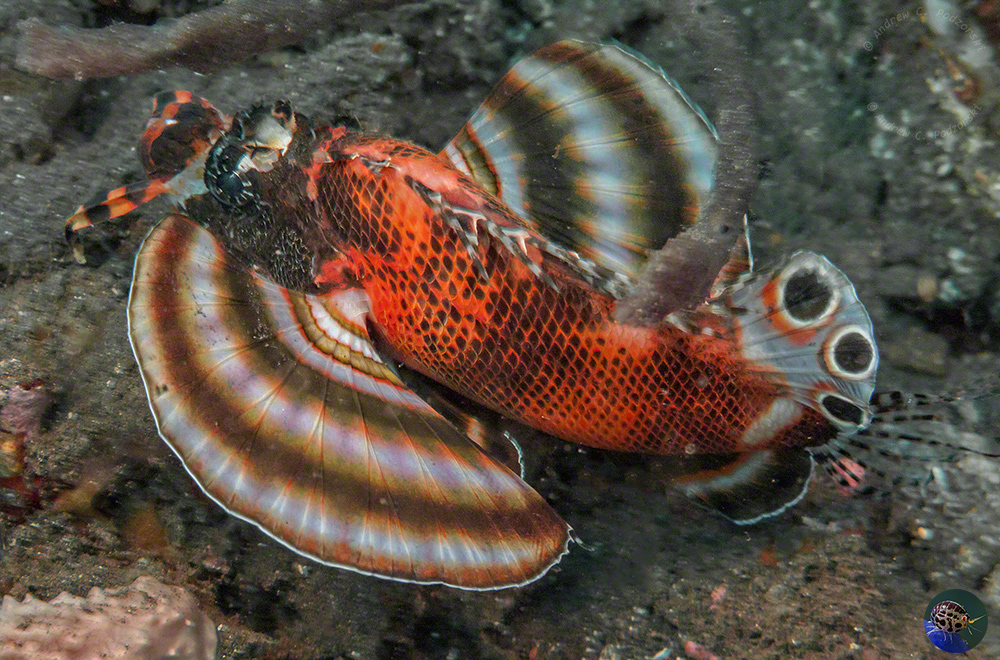
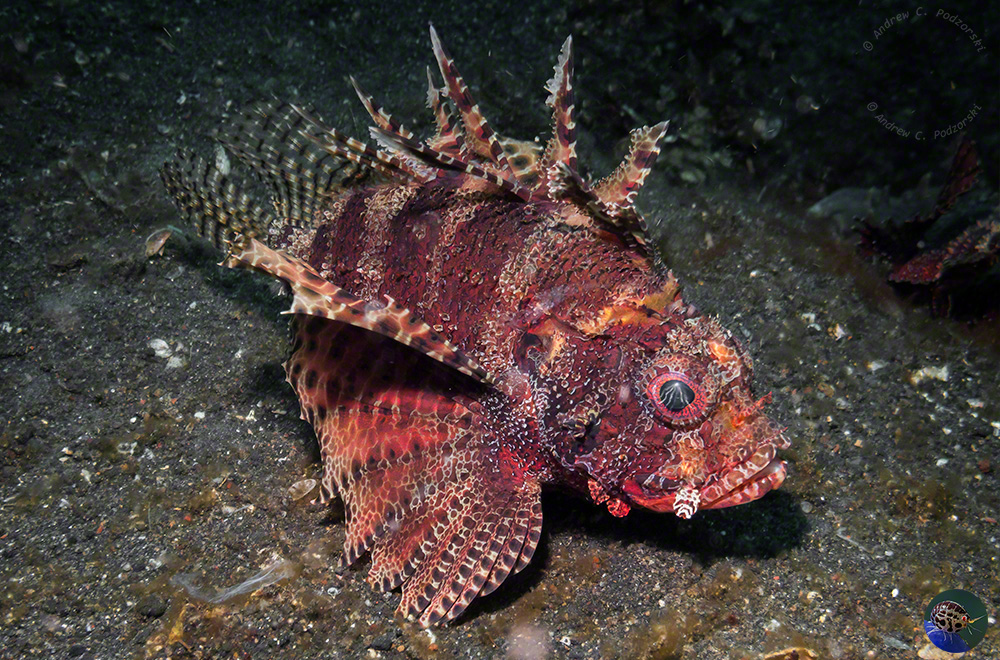
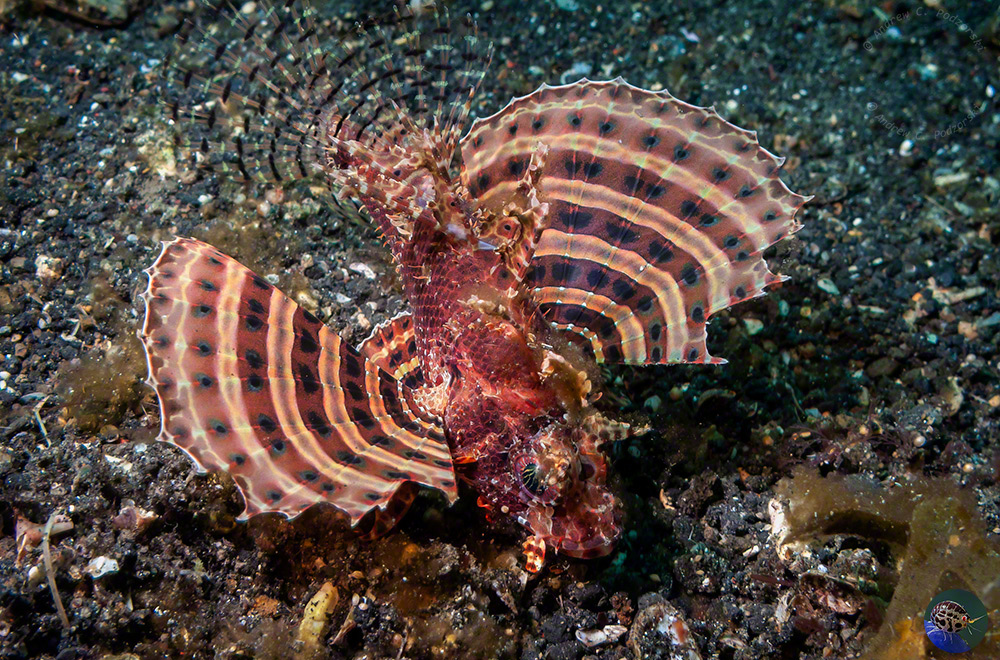
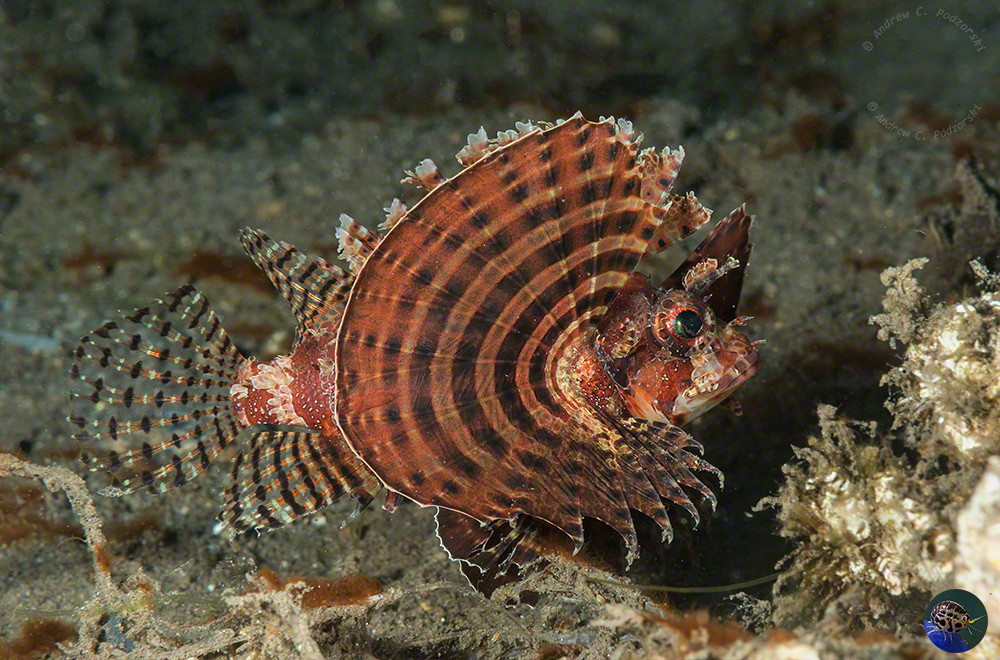
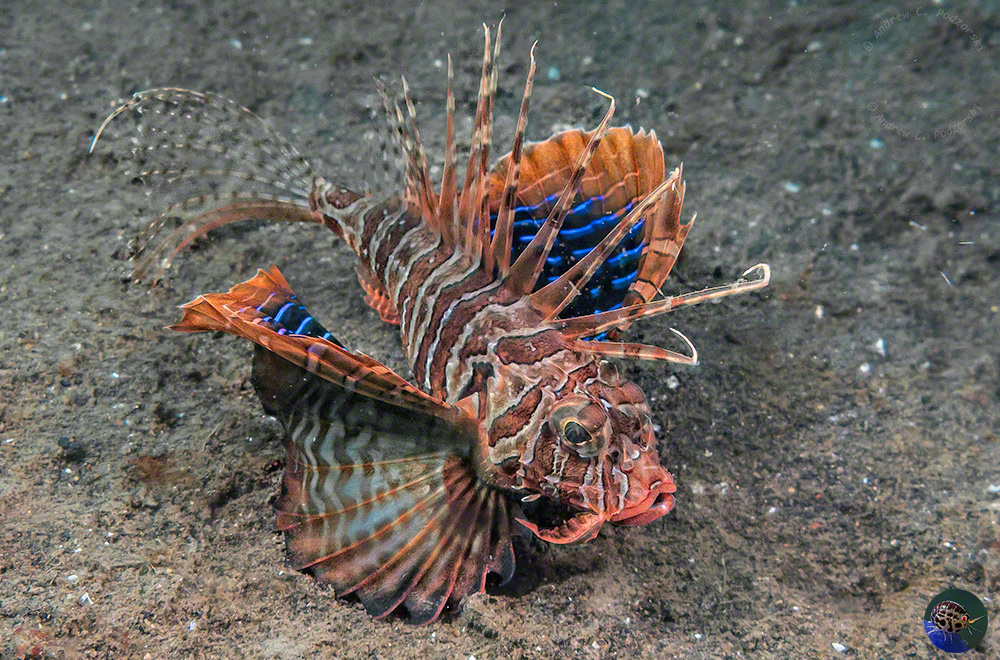
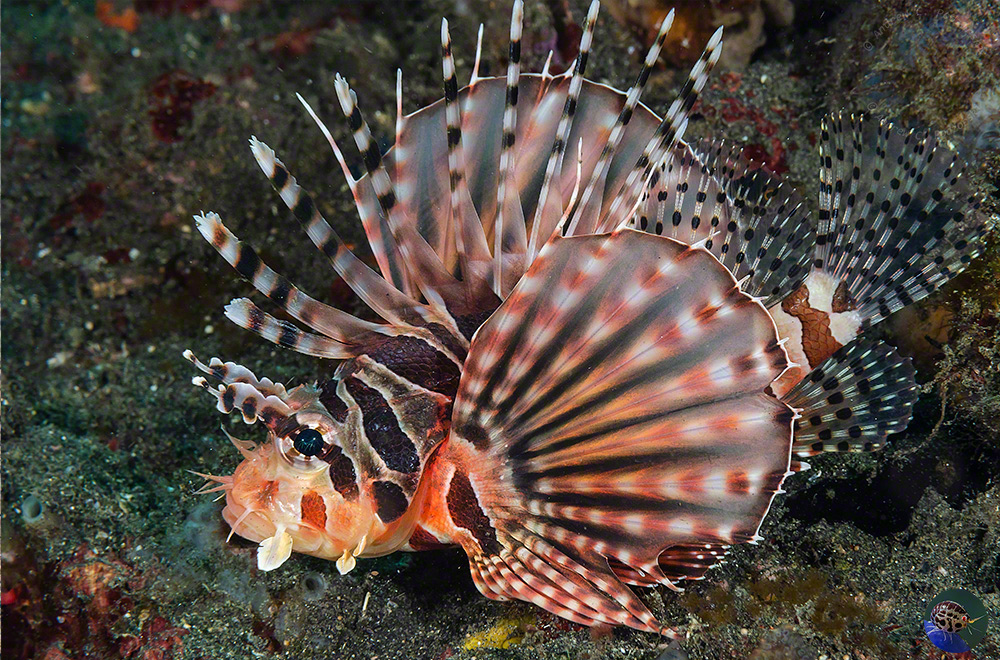
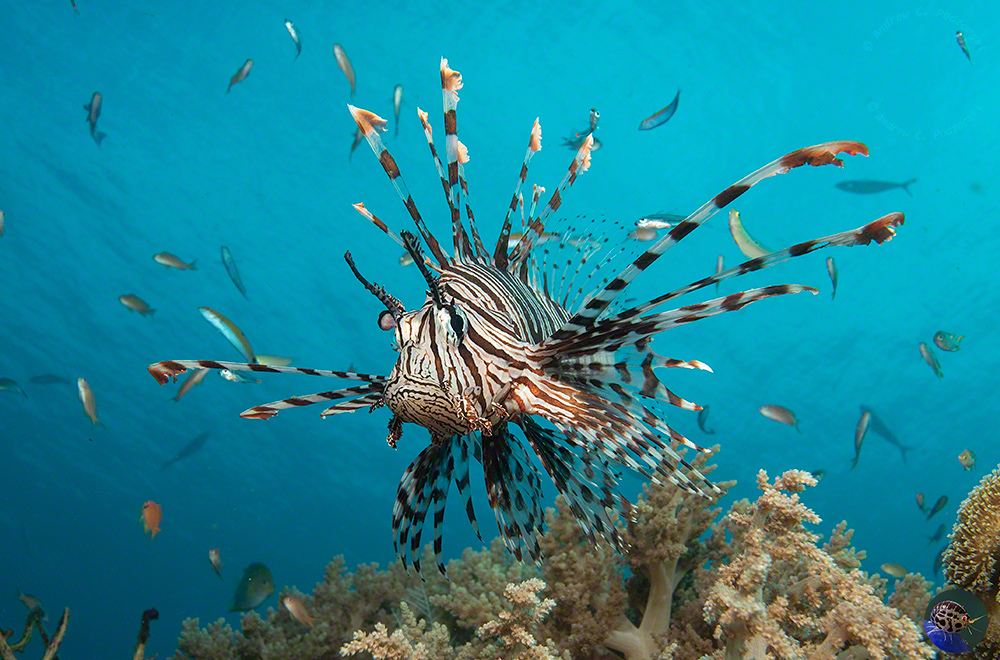
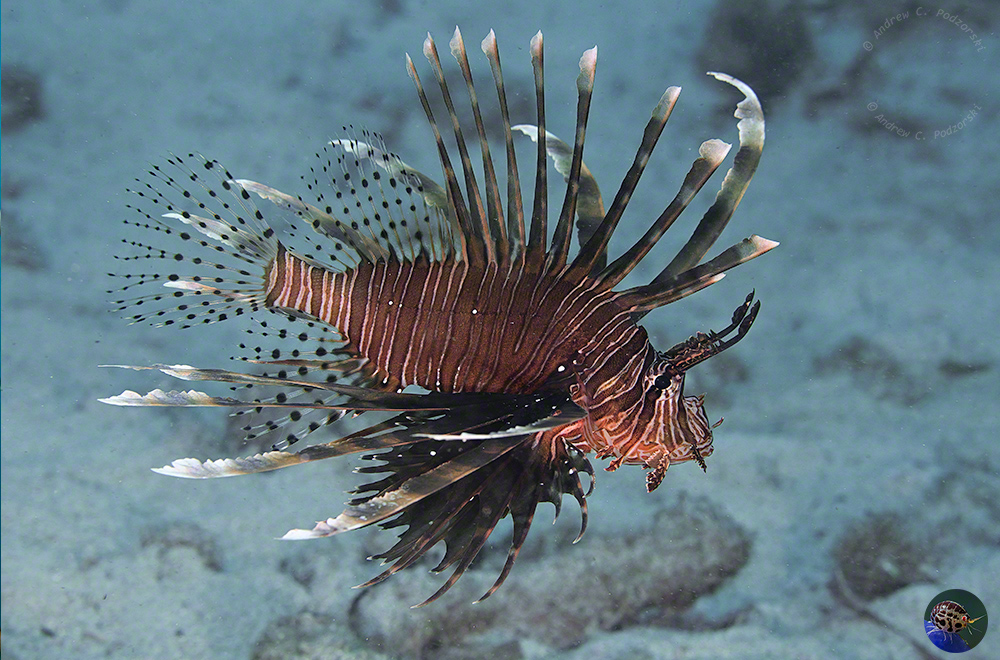
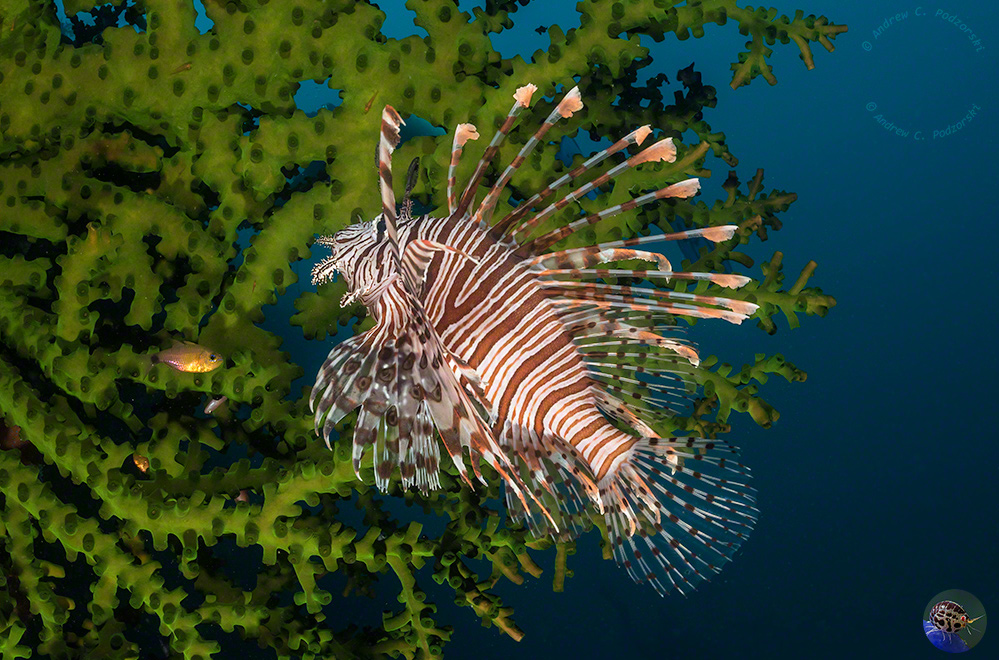
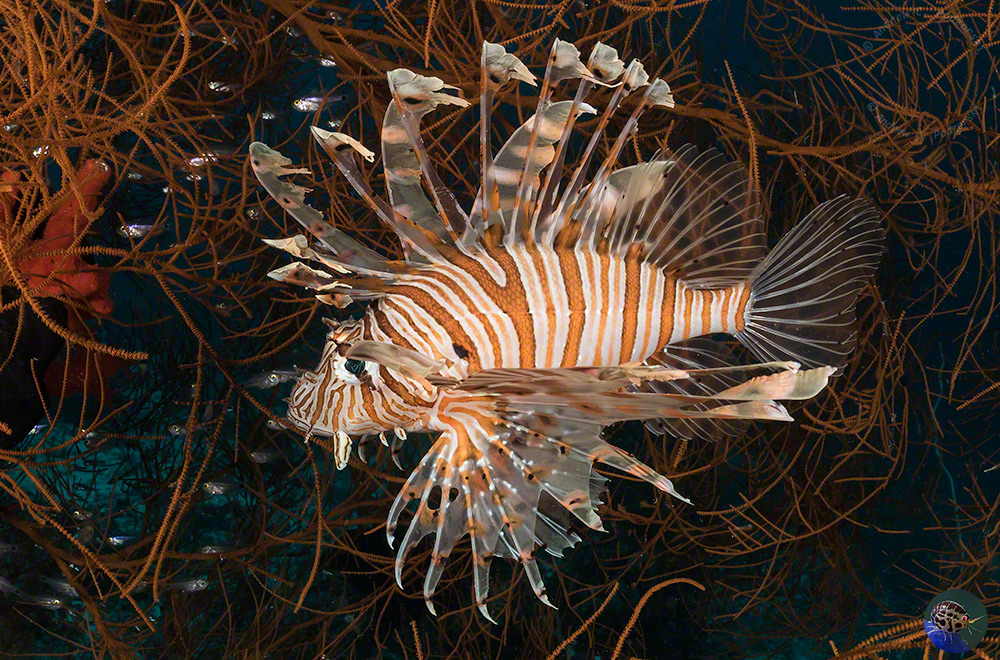
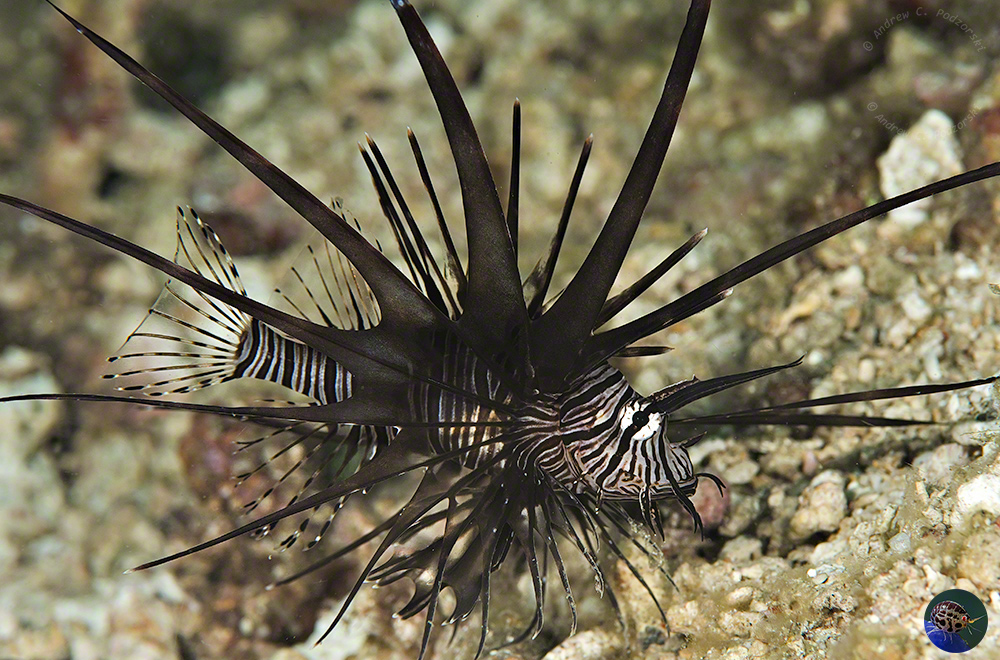
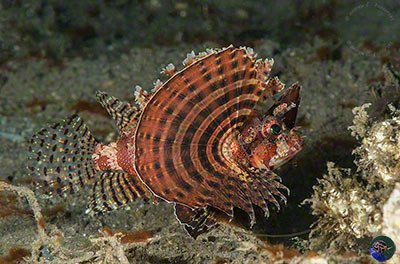
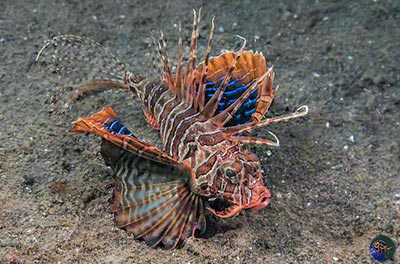
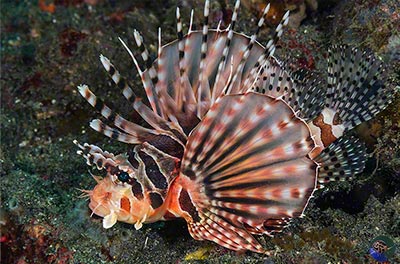
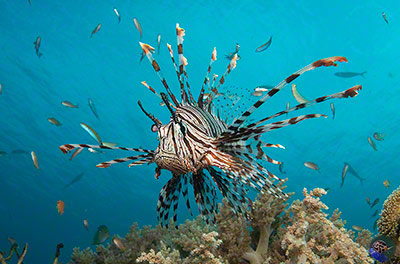
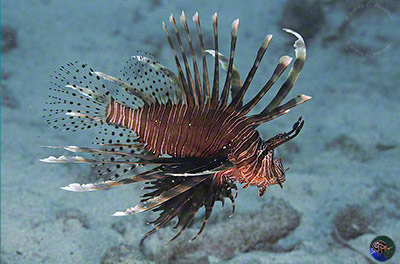
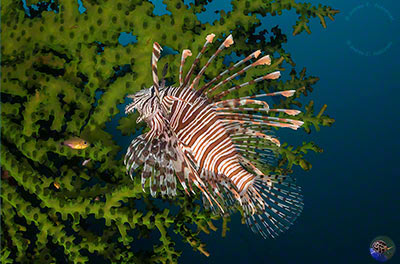
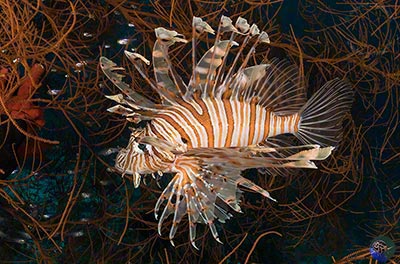
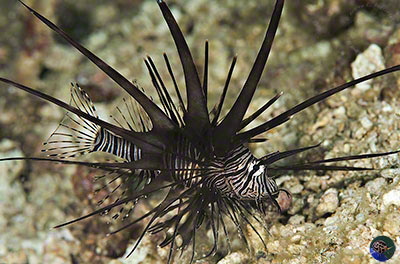
Lionfish have gained notoriety in recent years through their release on the east coast of the USA by irresponsible aquarium keepers. With no natural enemies, they have spread south and are all around the Caribbean. These voracious feeders have decimated native fish populations even to depths where they don't occur in their native areas. They have also spread from the Red Sea to the Mediterranean through the Suez canal, and are now causing ecological issues there.
Pterois is the genus most often seen by casual divers. In some areas they can be a danger at night for a very special reason. Some divers enjoy shining their lights close to lionfish at night so they can watch them feed of the fish attracted by the light. The effect is that when lionfish have been conditioned in this way, they come to any diver with a light hoping for an easy feed. Areas where this has been practiced should be avoided at night.
Scorpionfish
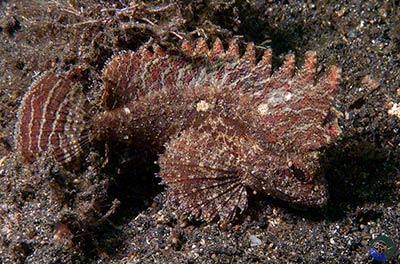
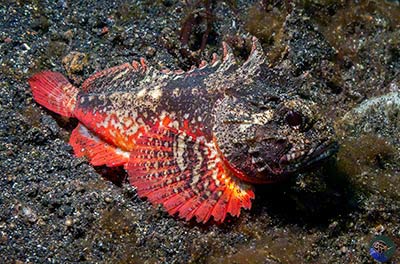
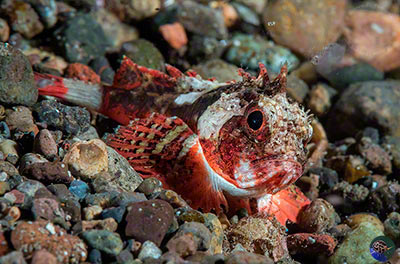
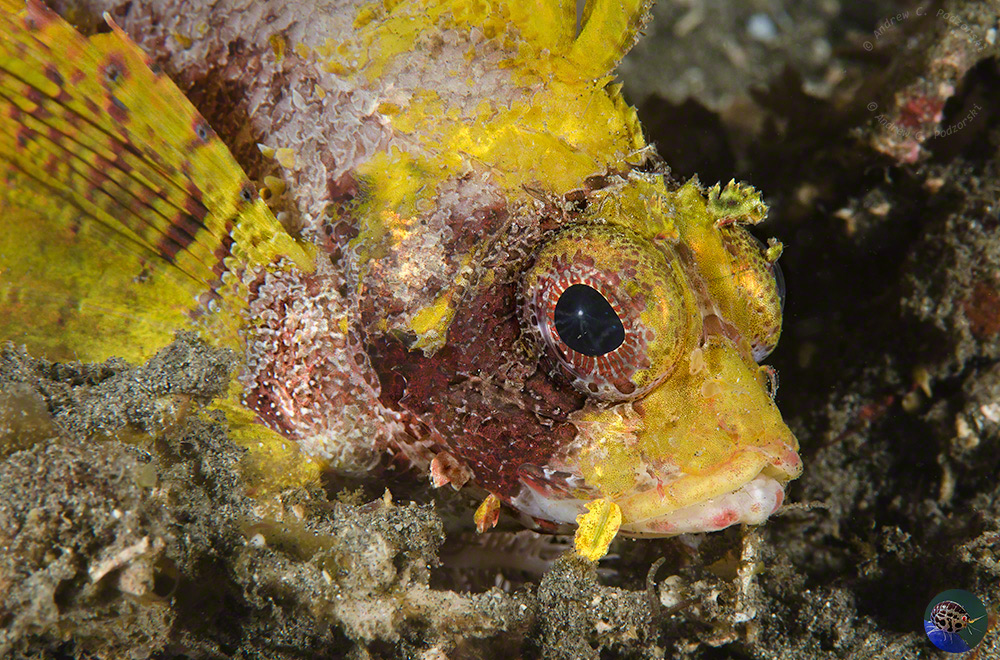
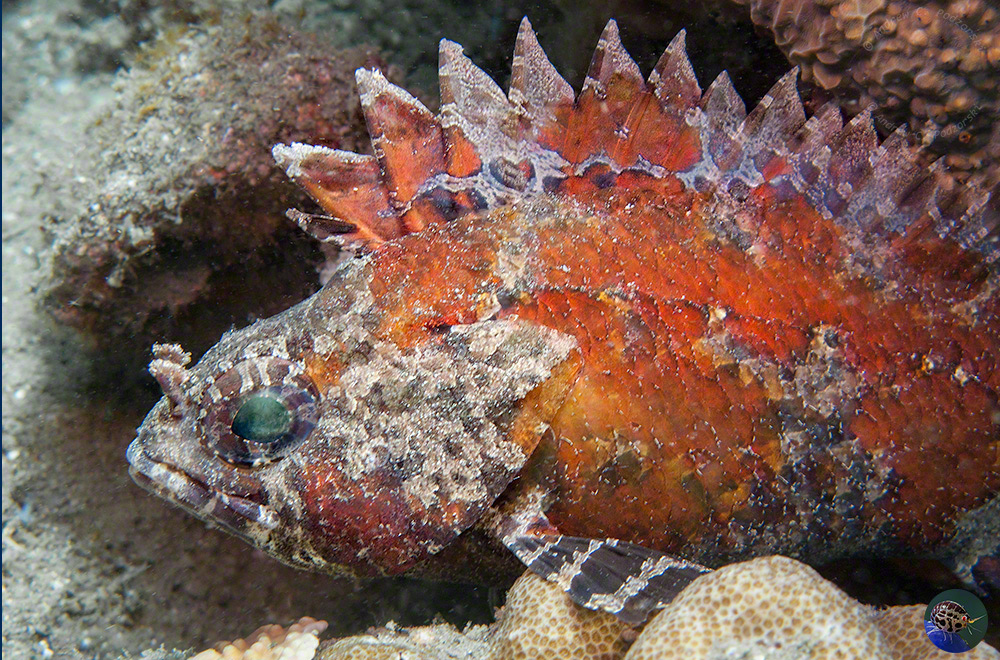
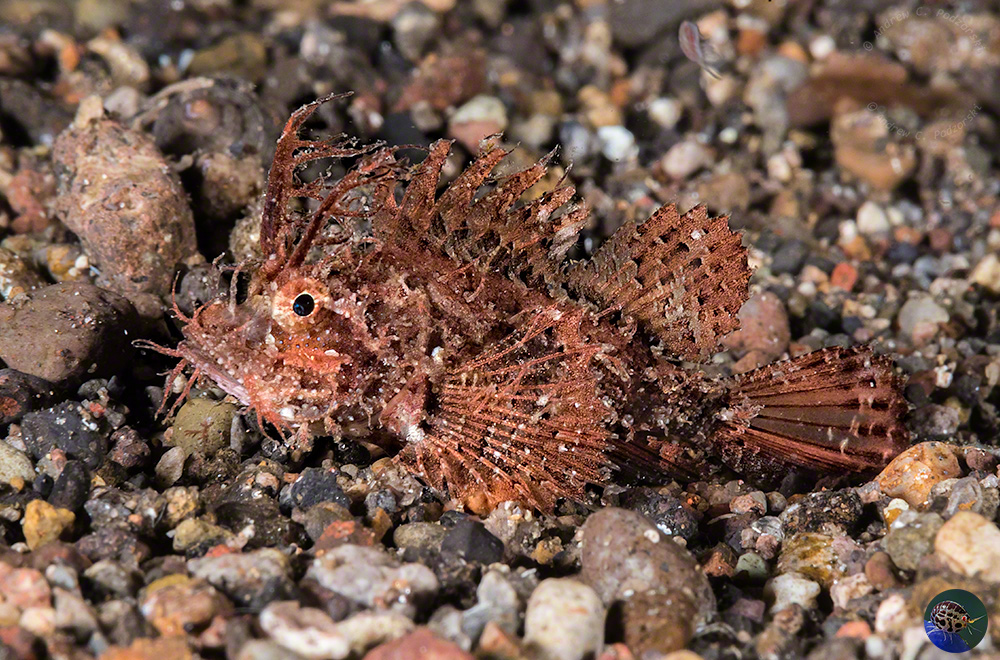
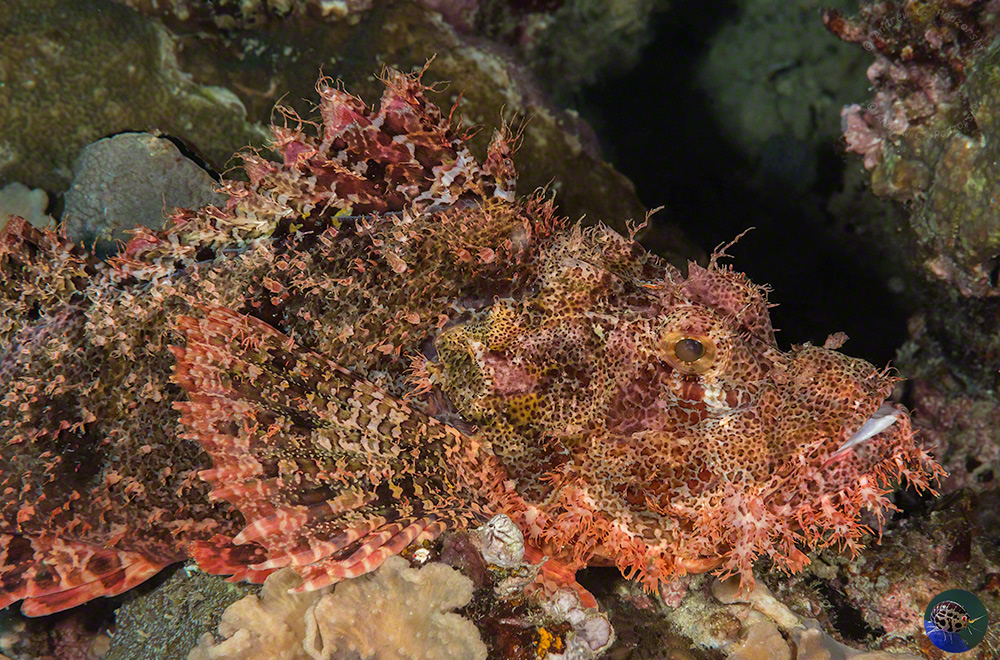
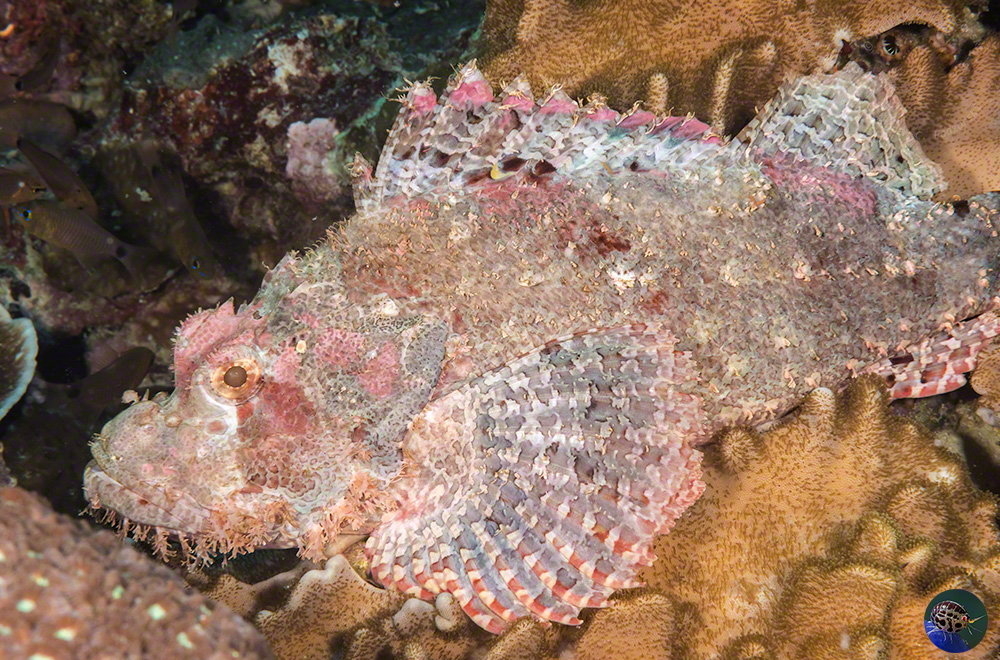
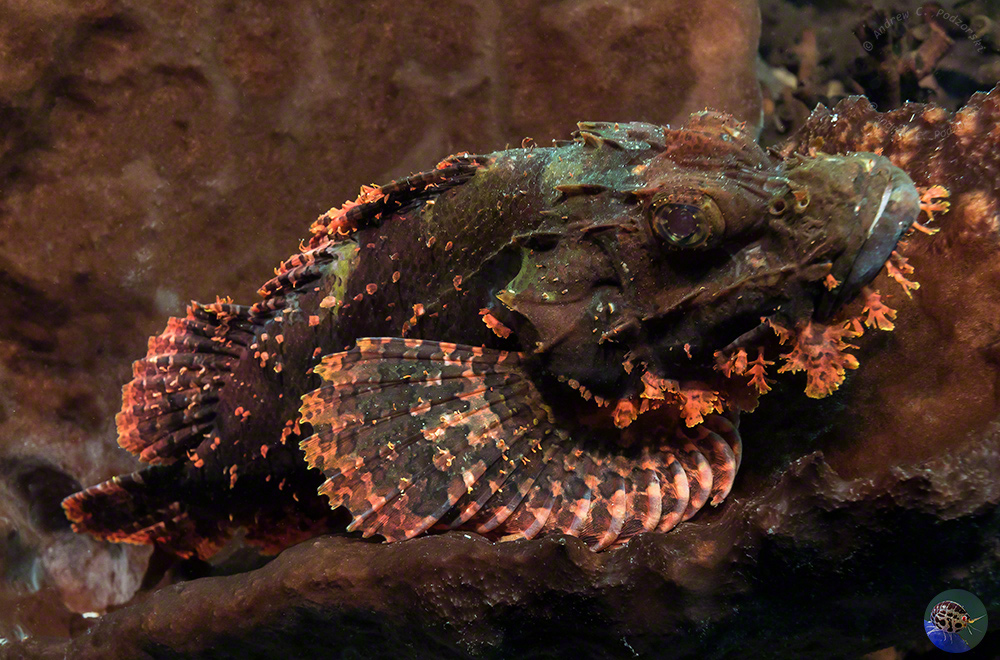
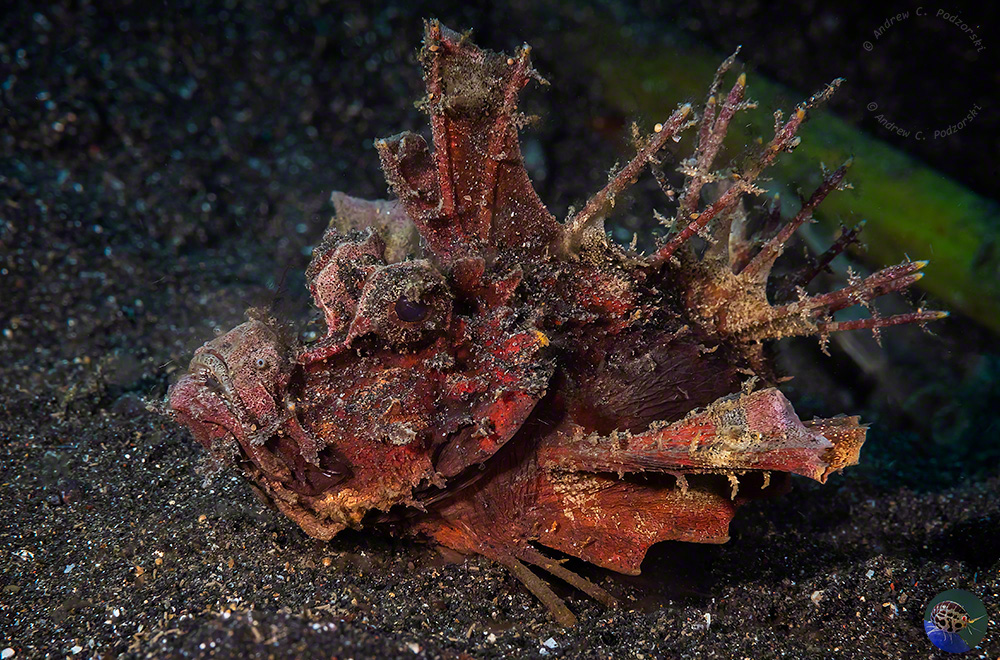
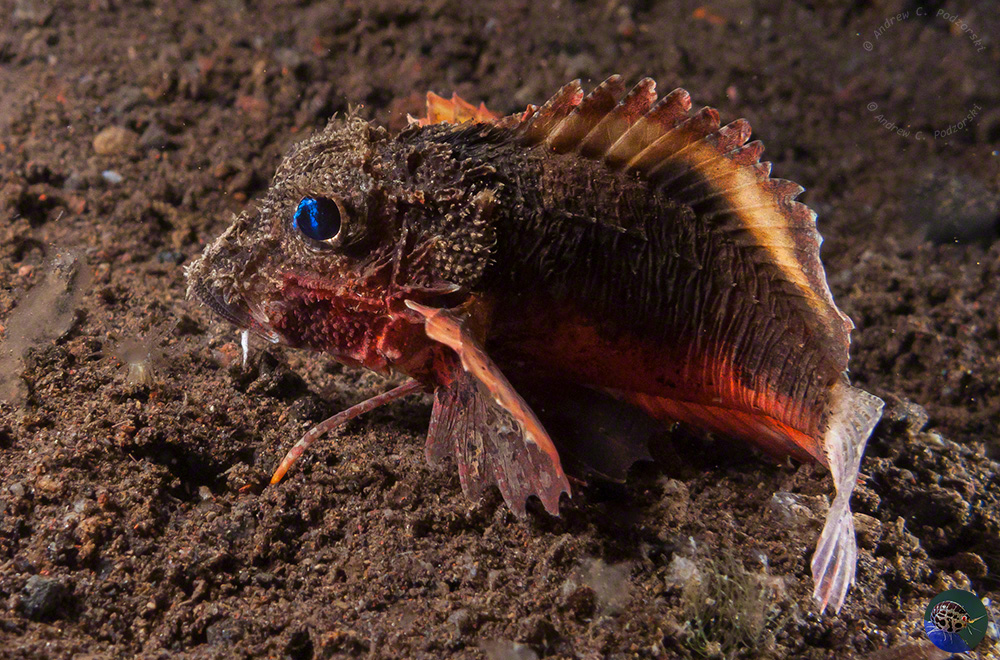
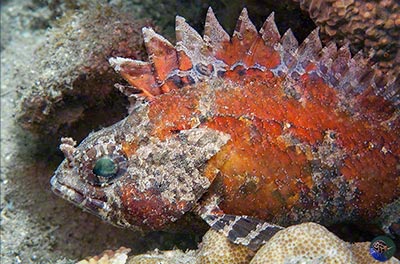
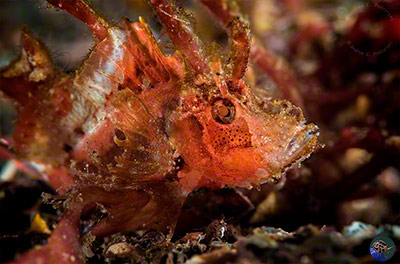
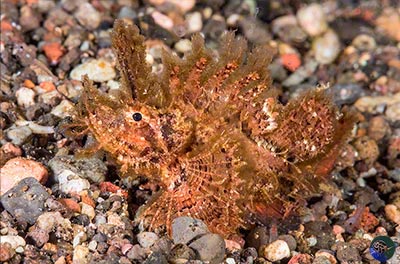
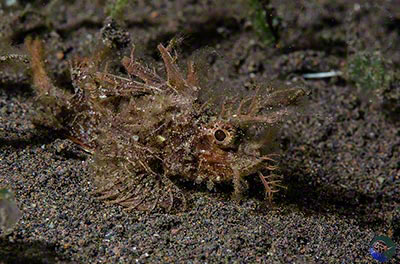
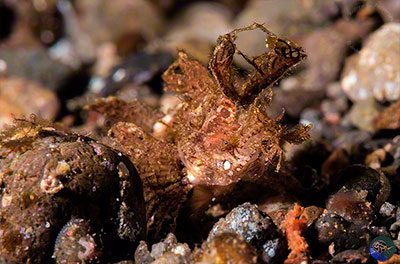
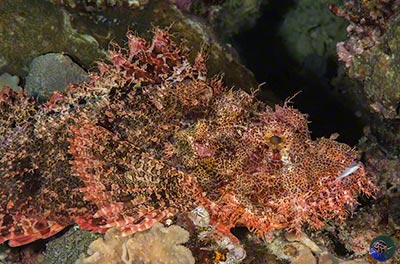
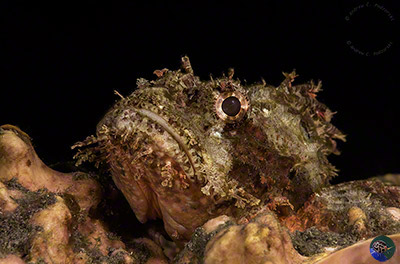
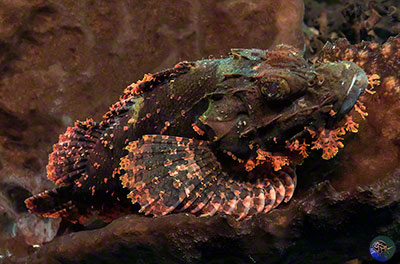
In contrast to stonefish, all the fin rays of scorpionfish are equipped with poisonous glands. The Tasseled Scorpoinfish (Scorpaenopsis oxycephala) has the camouflage advantage that it can quickly change colour to match its' background.
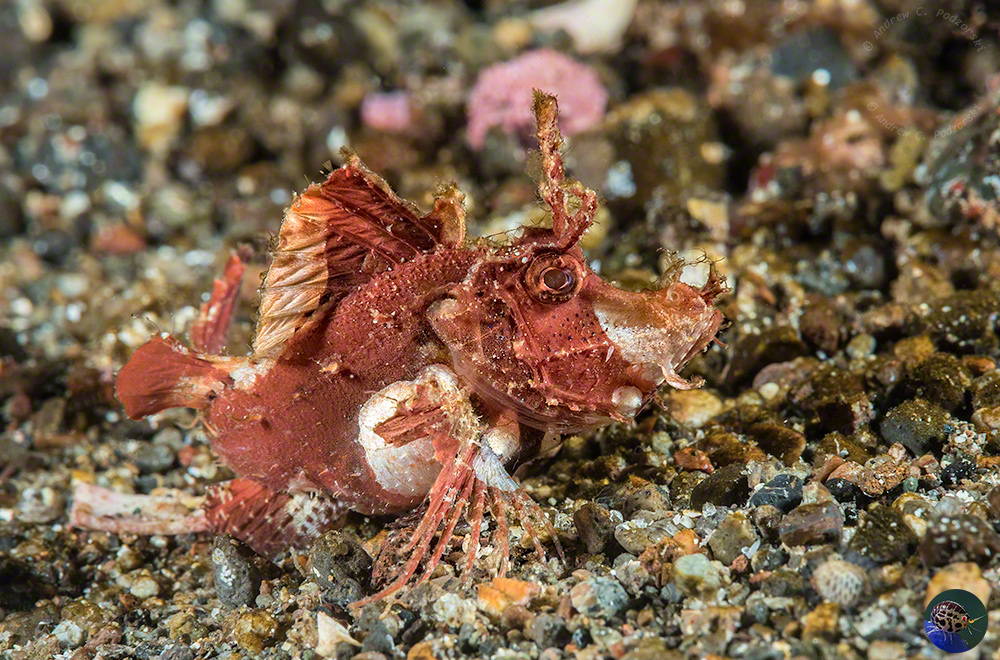
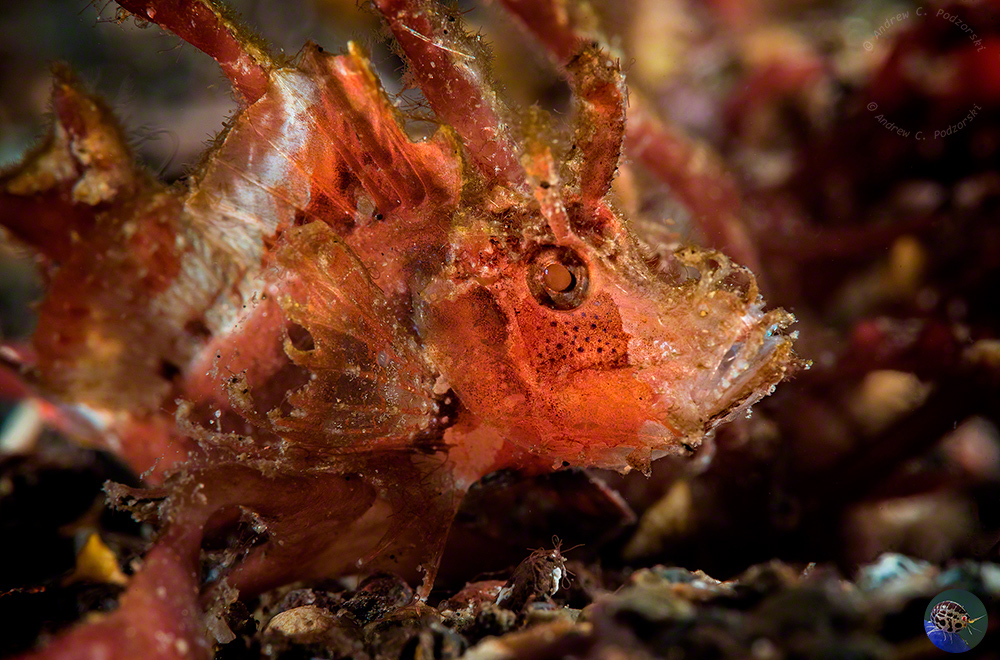
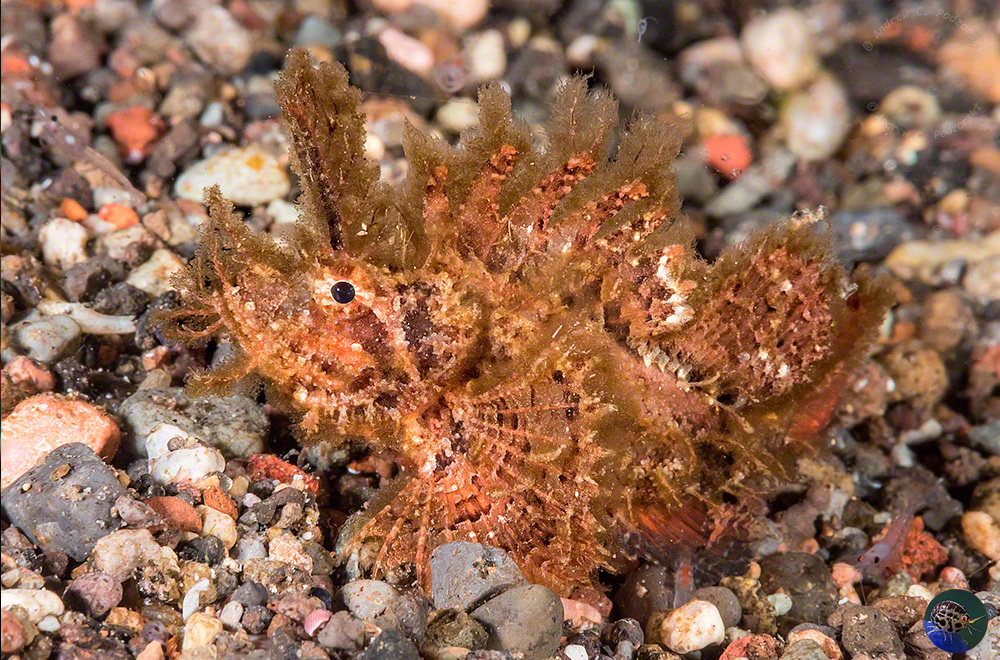
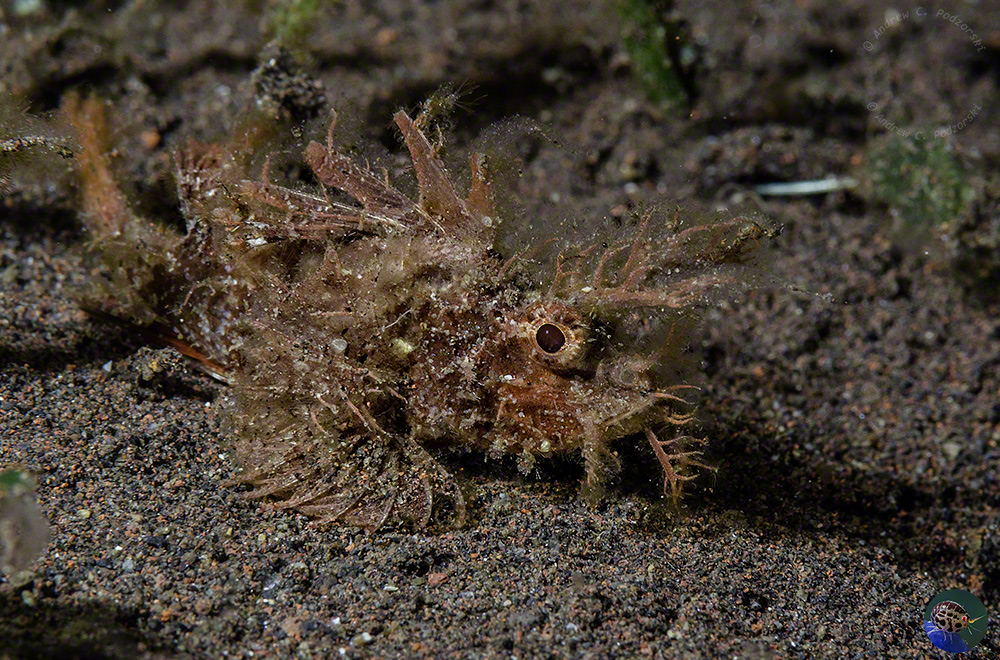
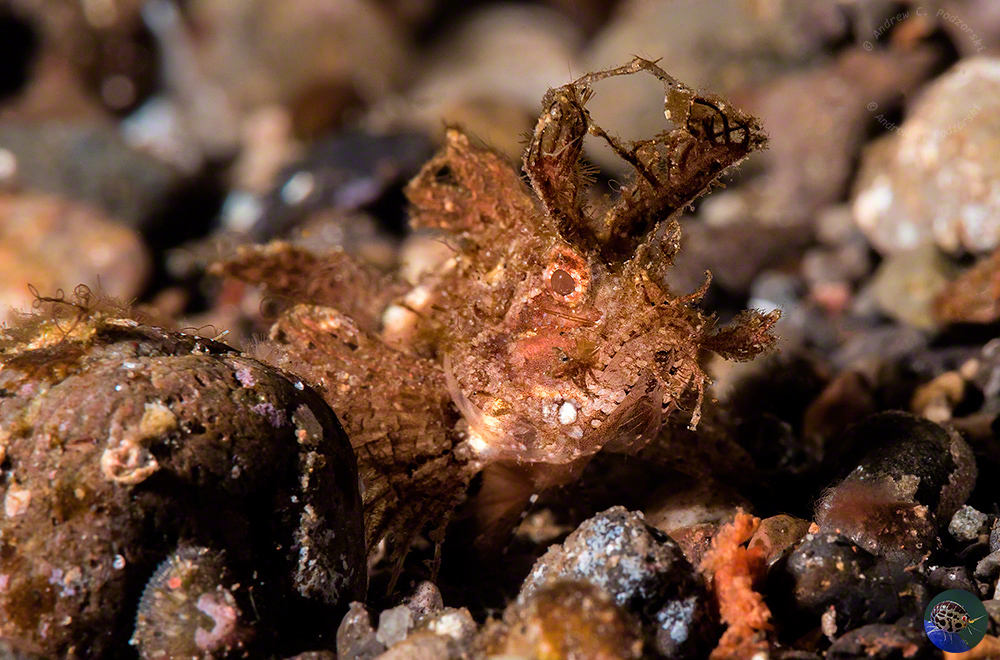
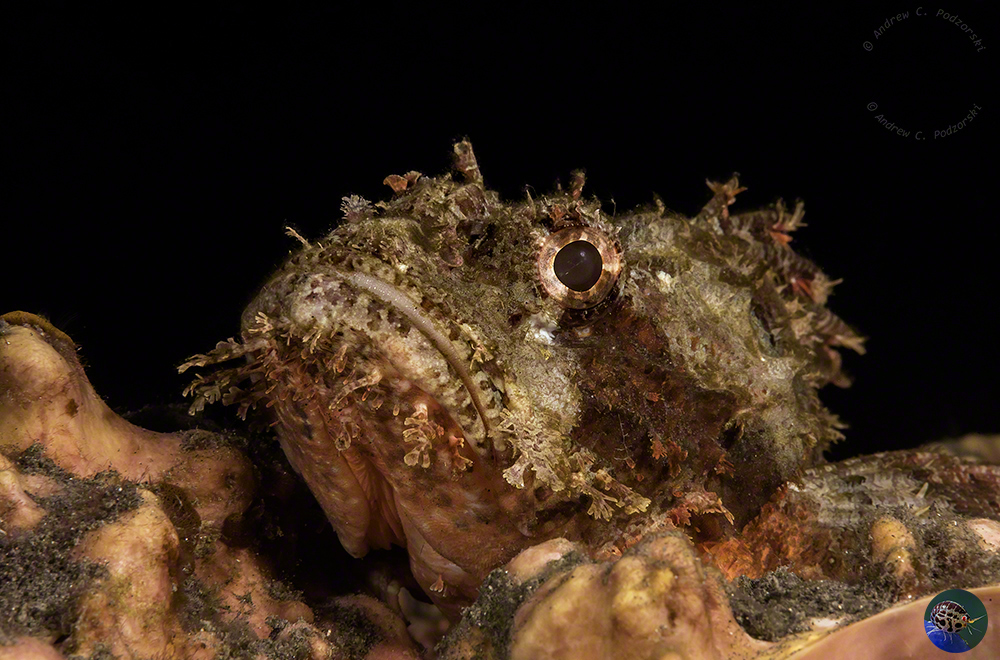
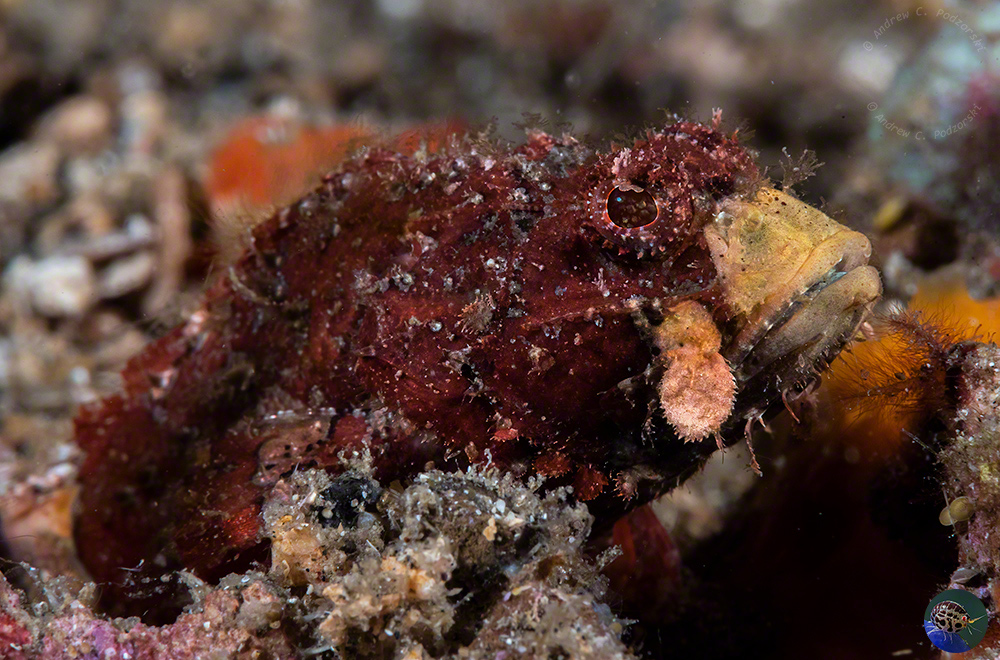
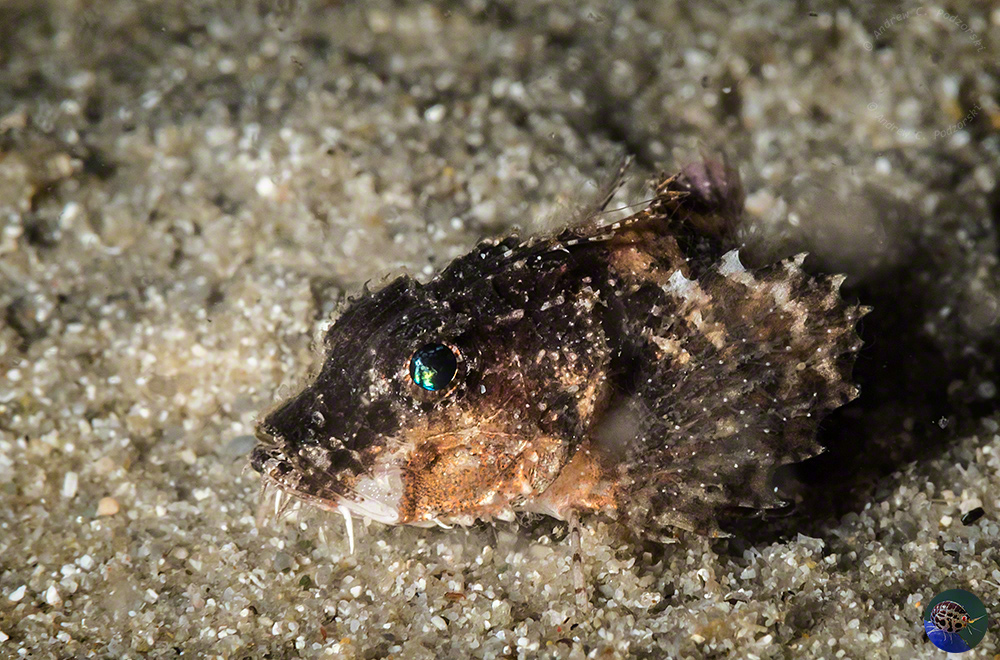
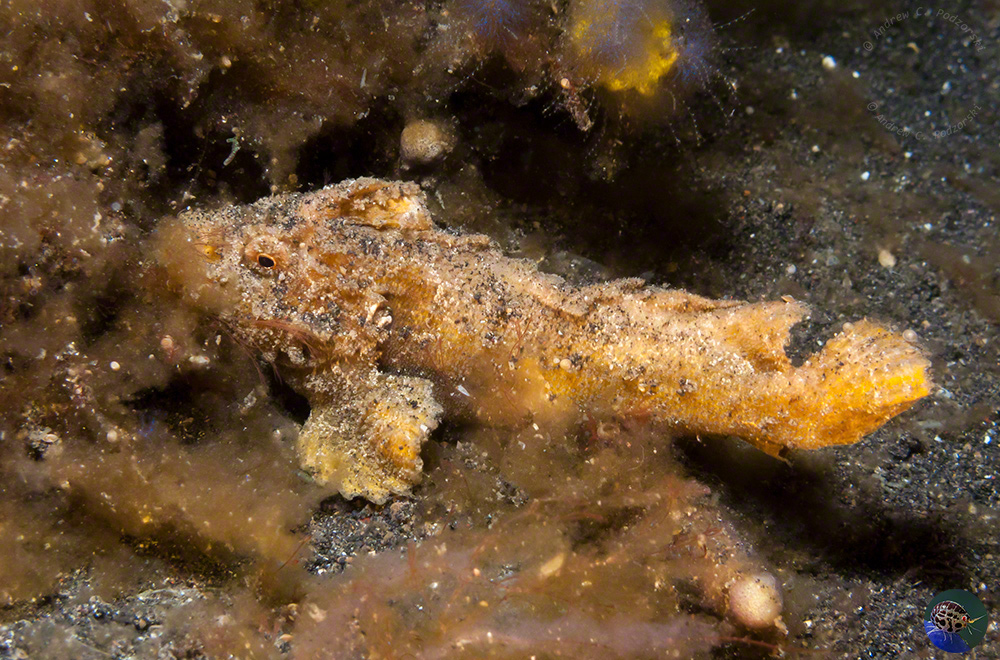
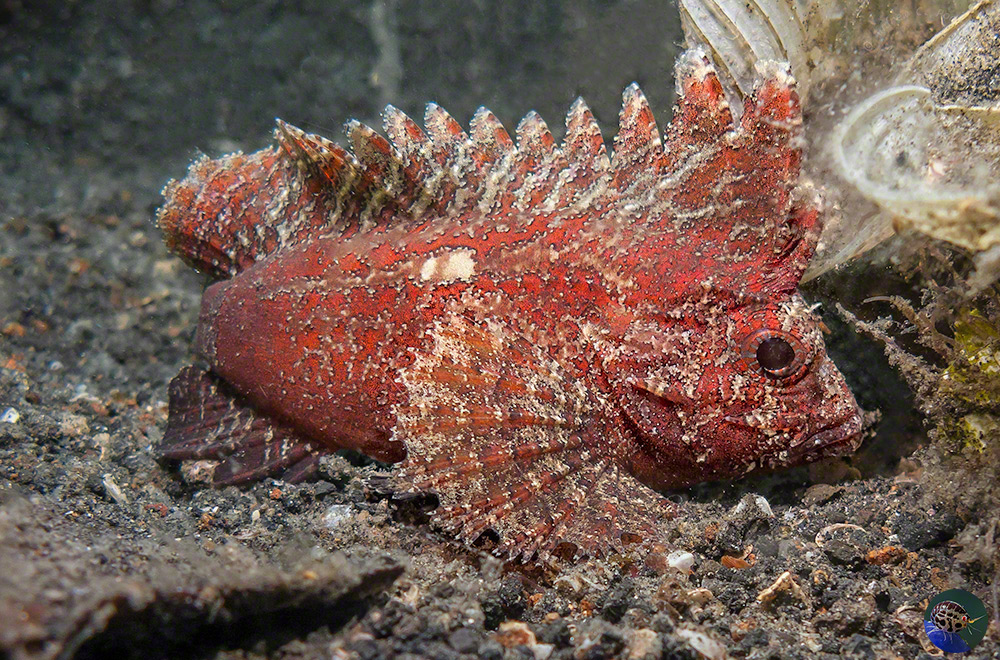
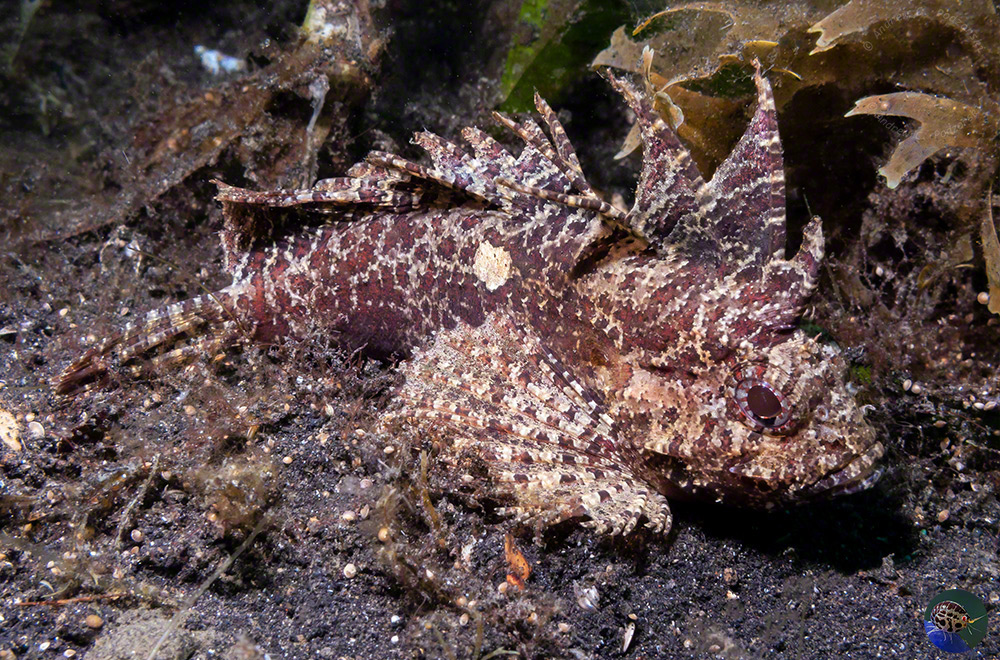
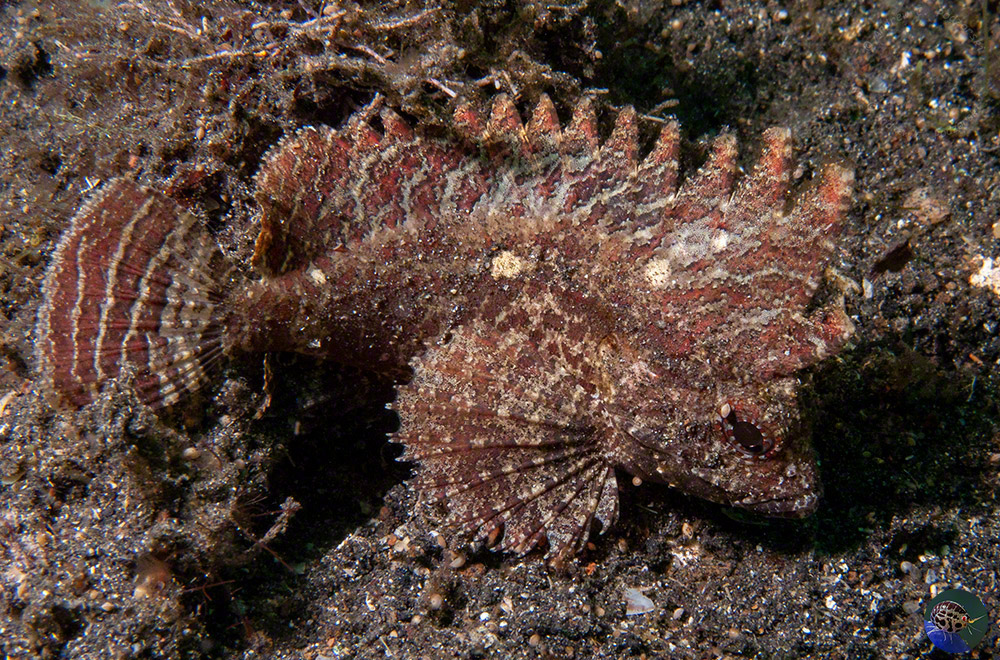
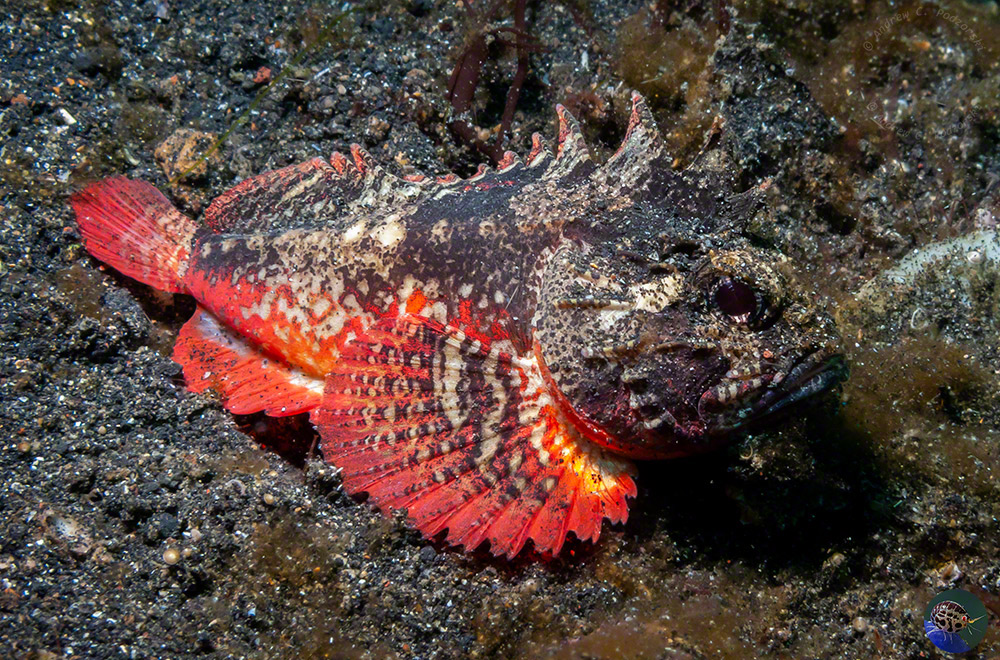
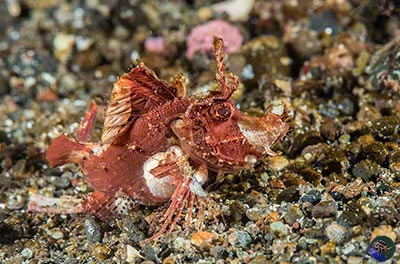
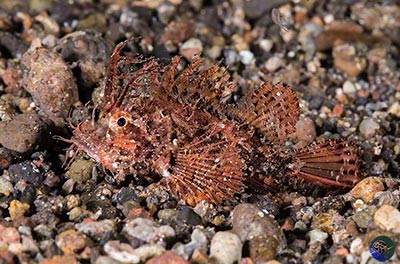
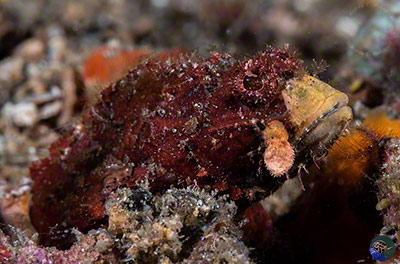
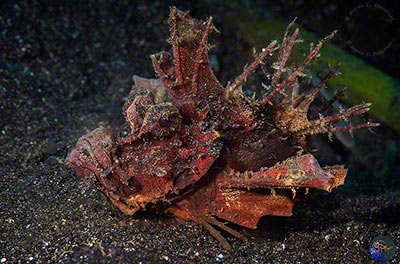
Ambon Scorpionfish (Pteroidichthys amboinensis) lok a little similare to weed scorpionfish. They are smaller, often brown and covered in algae, but sometimes light or dark red specimens can be seen.
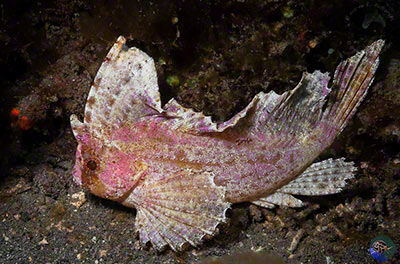
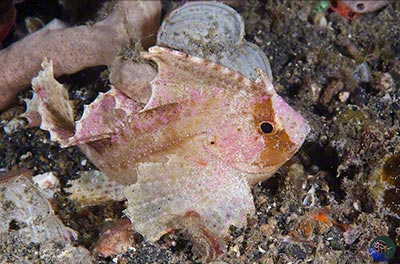
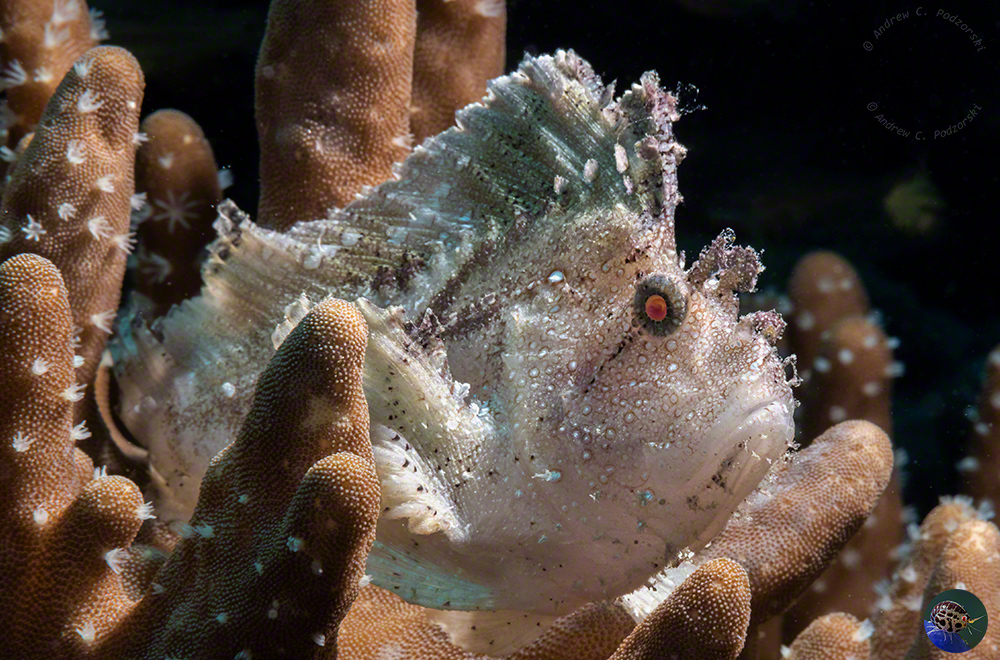
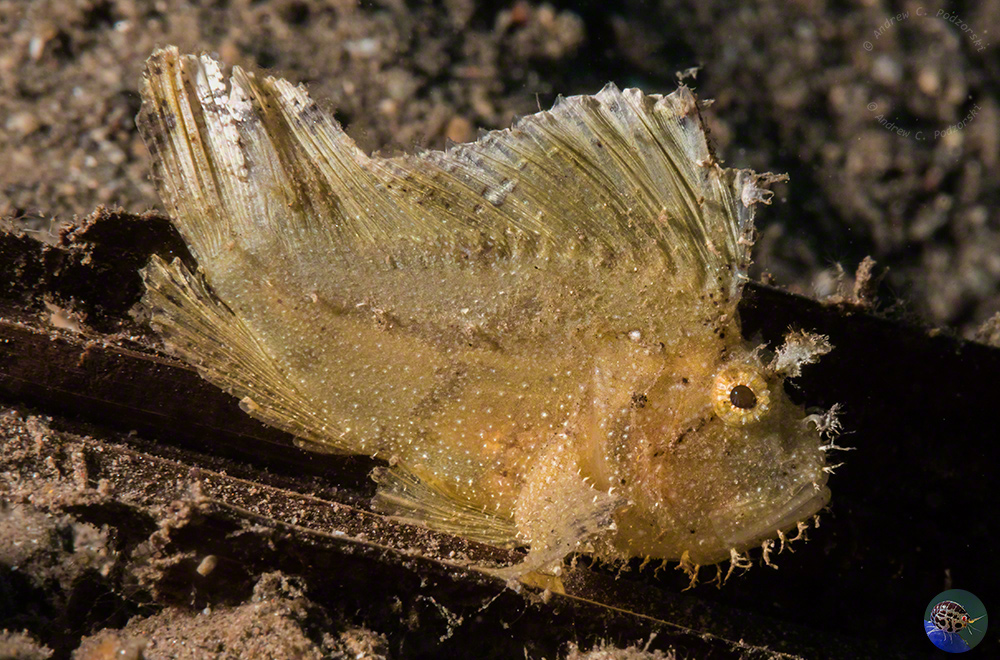
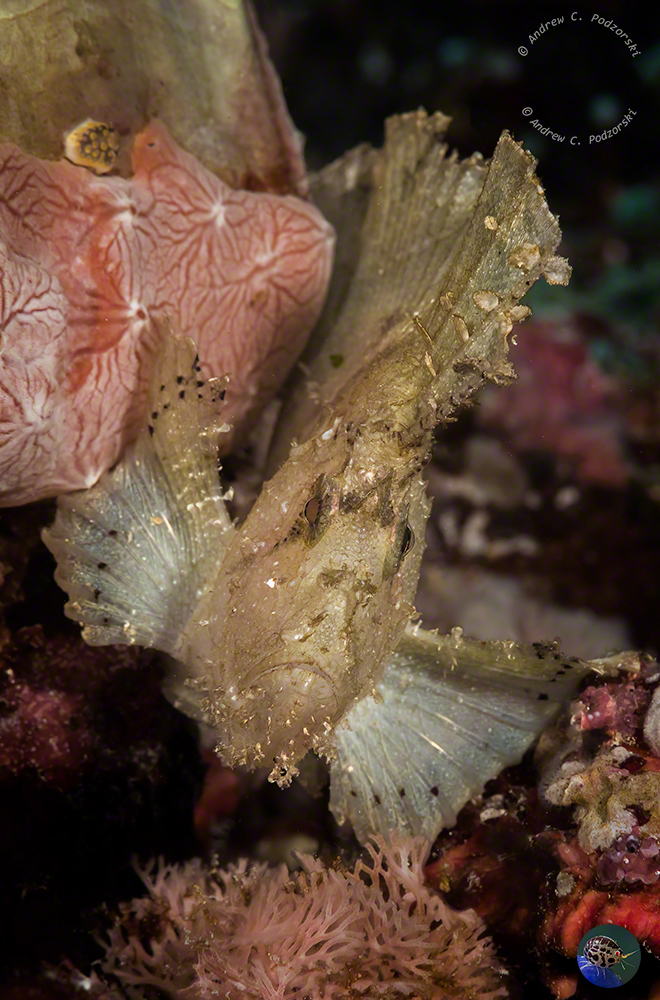
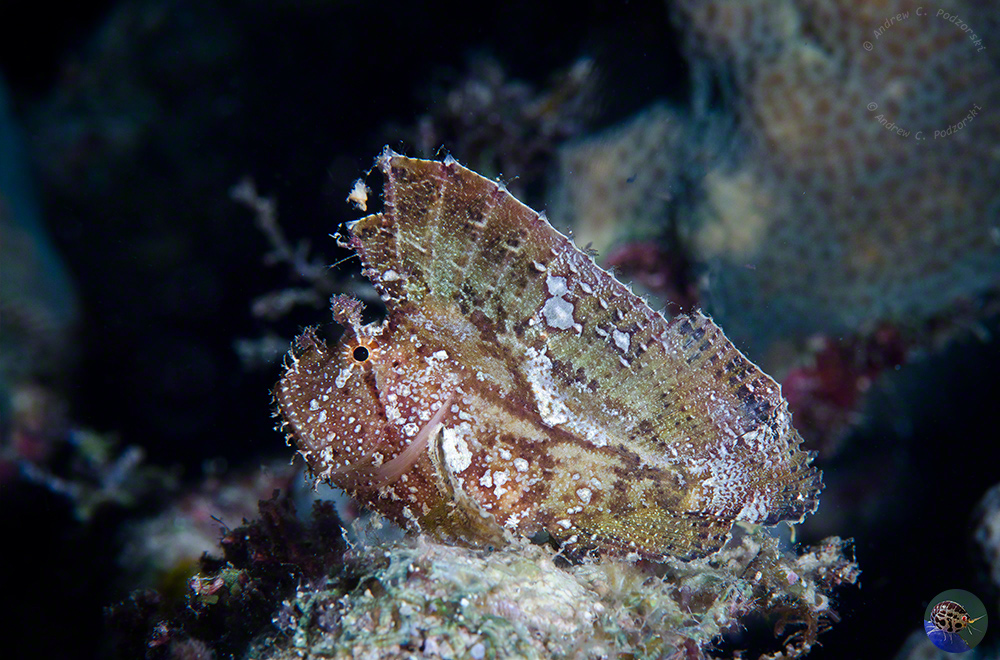
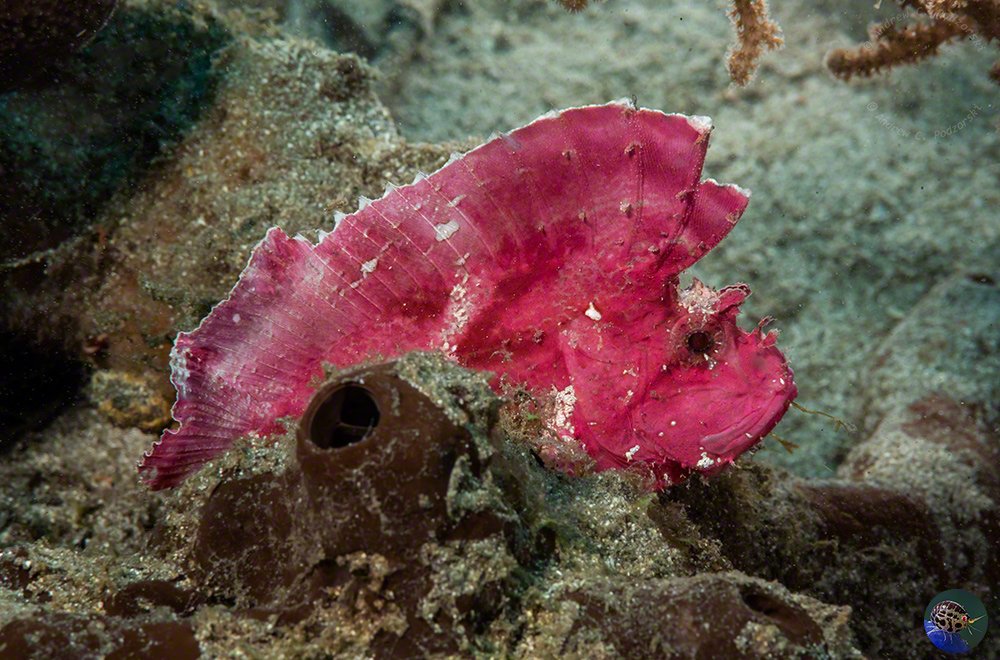
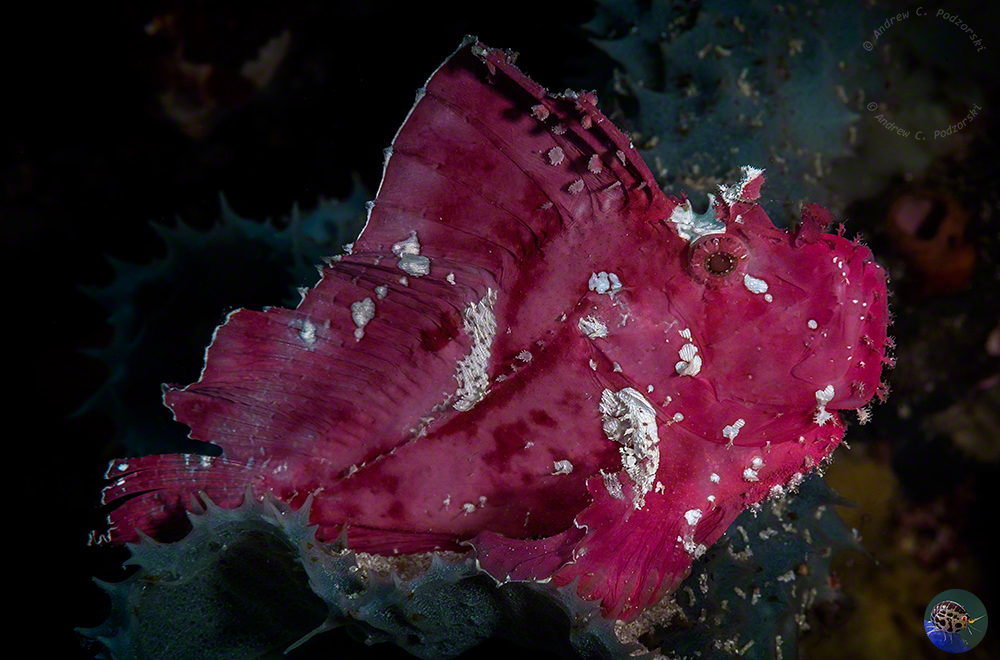
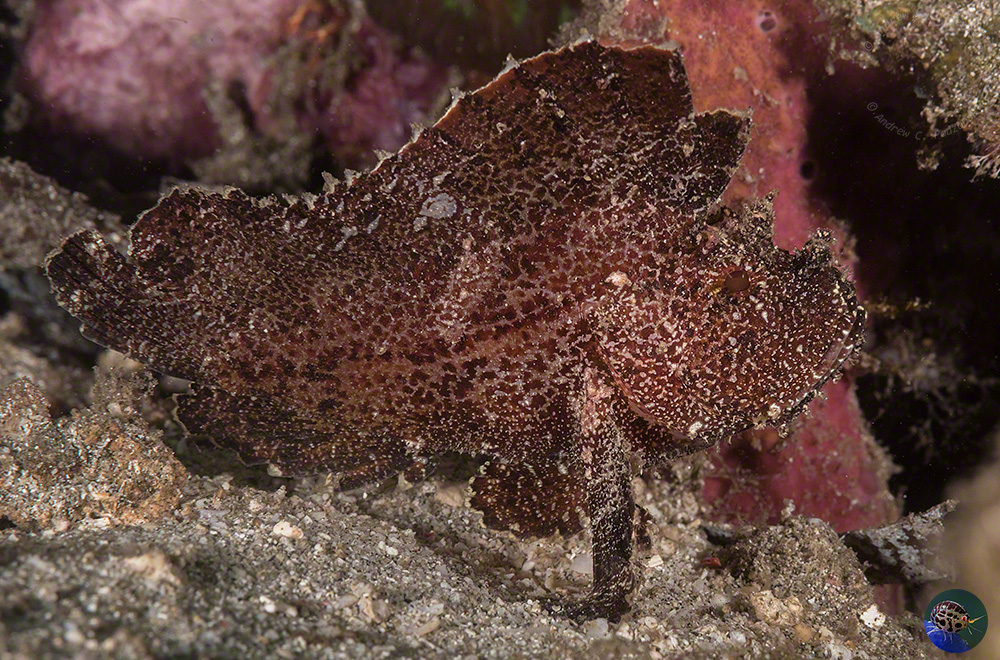
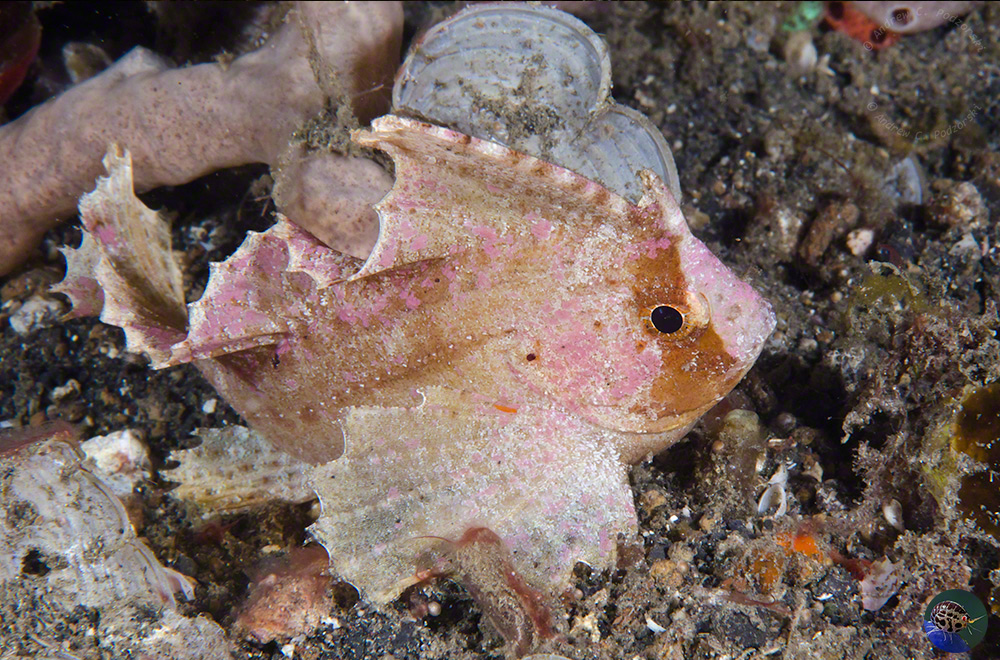
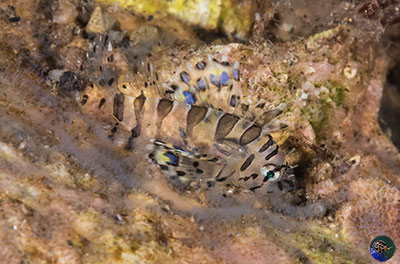
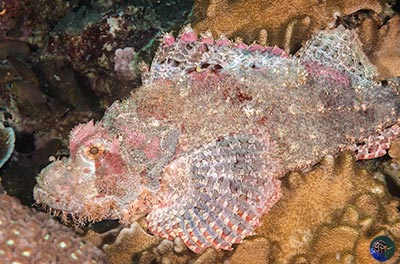
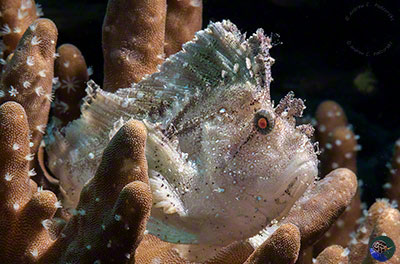
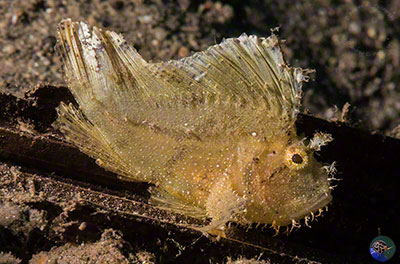
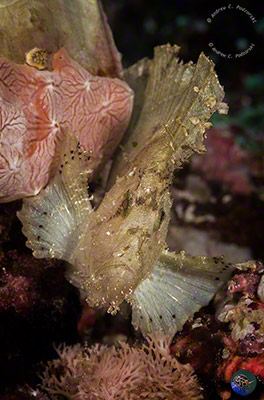
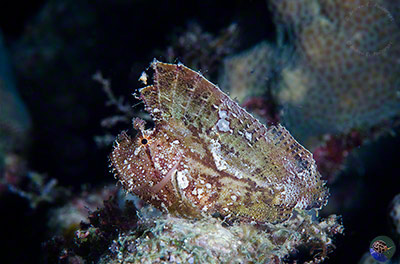
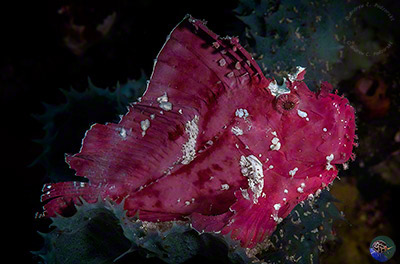
Leaf Scorpionfish (Taenianotus triacanthus) have a wide colour variation, and pairs can be seen where one is pink and the other yellow or white. They lie upright and sway gentily from side to side, imitating a leaf. The body is very thin as can be seen from the images.
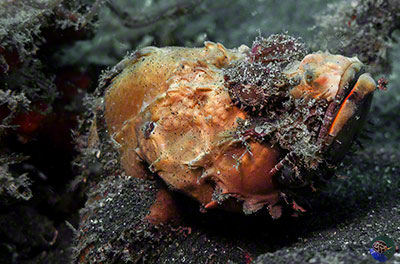
Centrogenys vaigiensis is included here as it mimics scopionfish so well. In reality, it belongs the grouper family.
Stonefish & Stingers
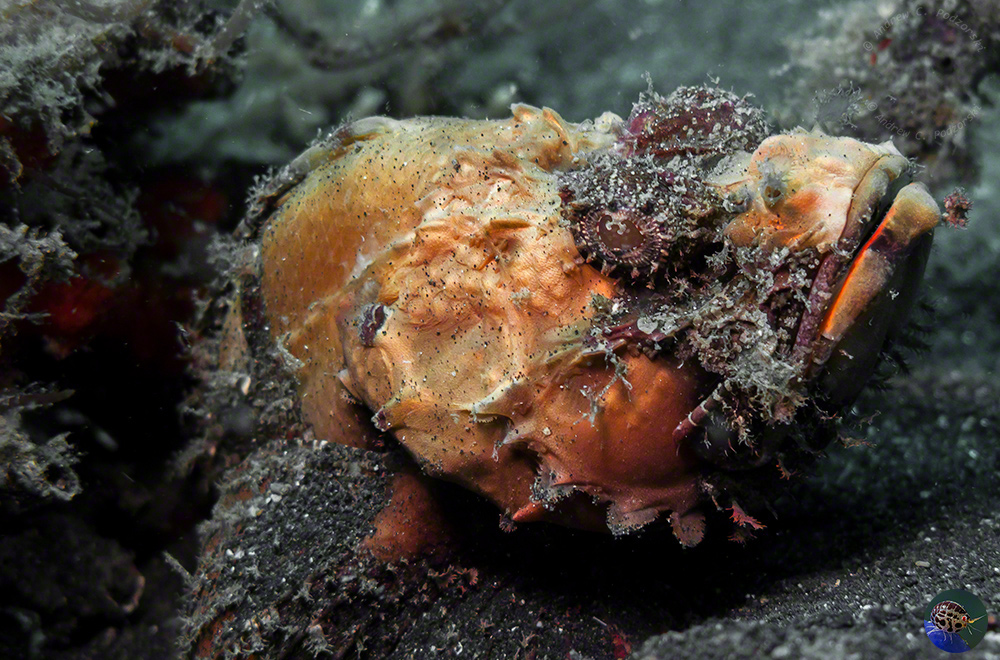
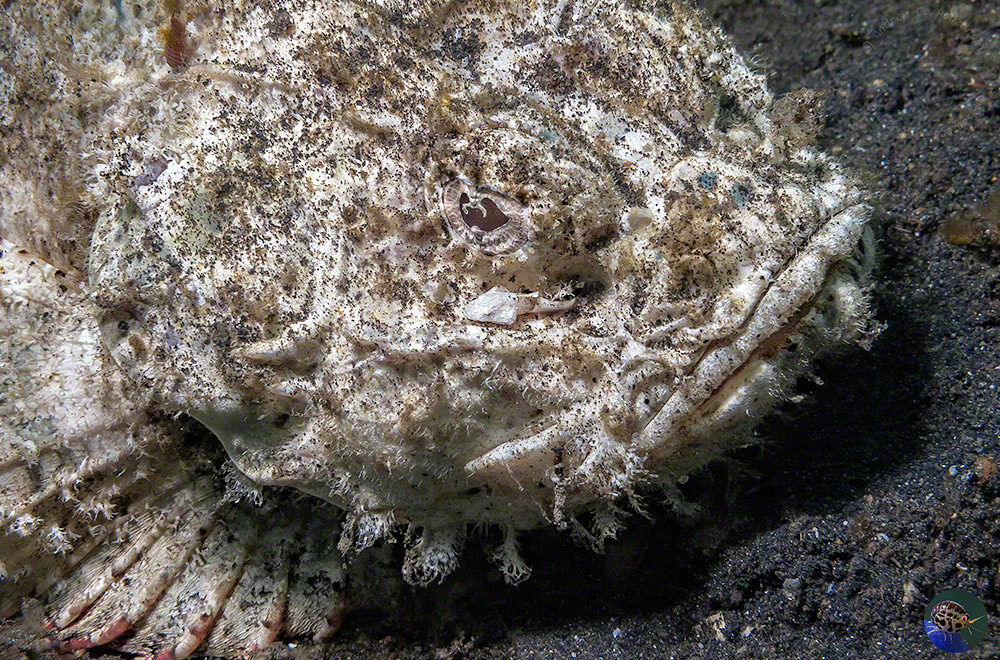
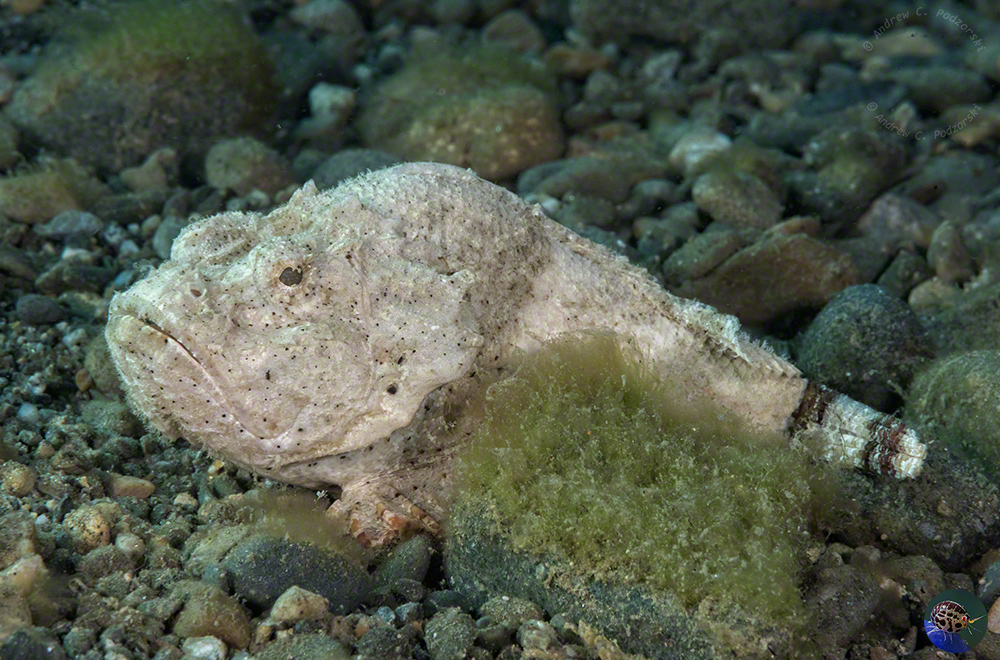
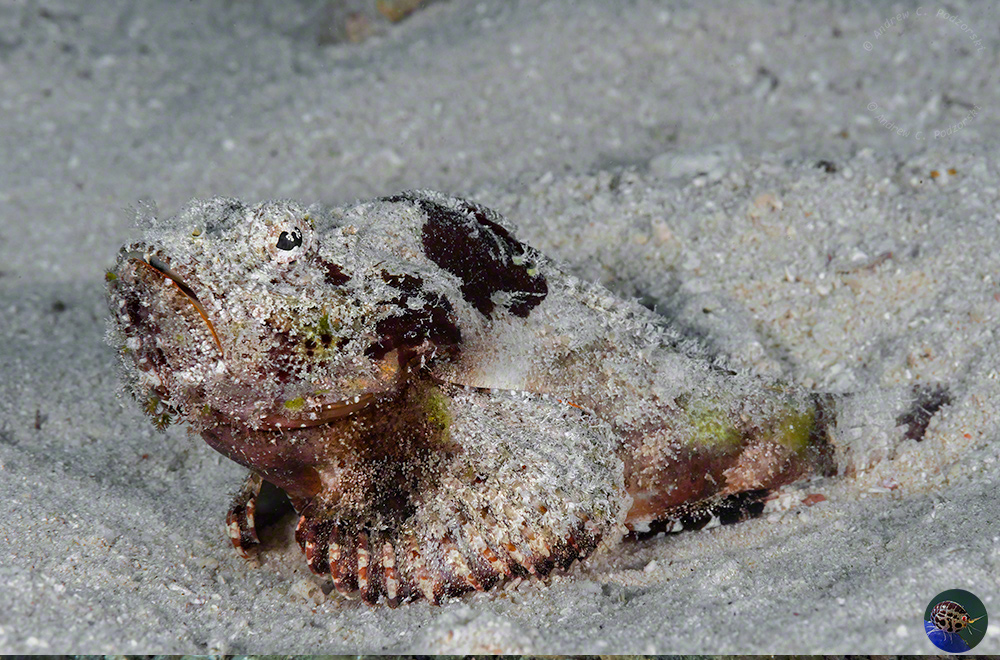
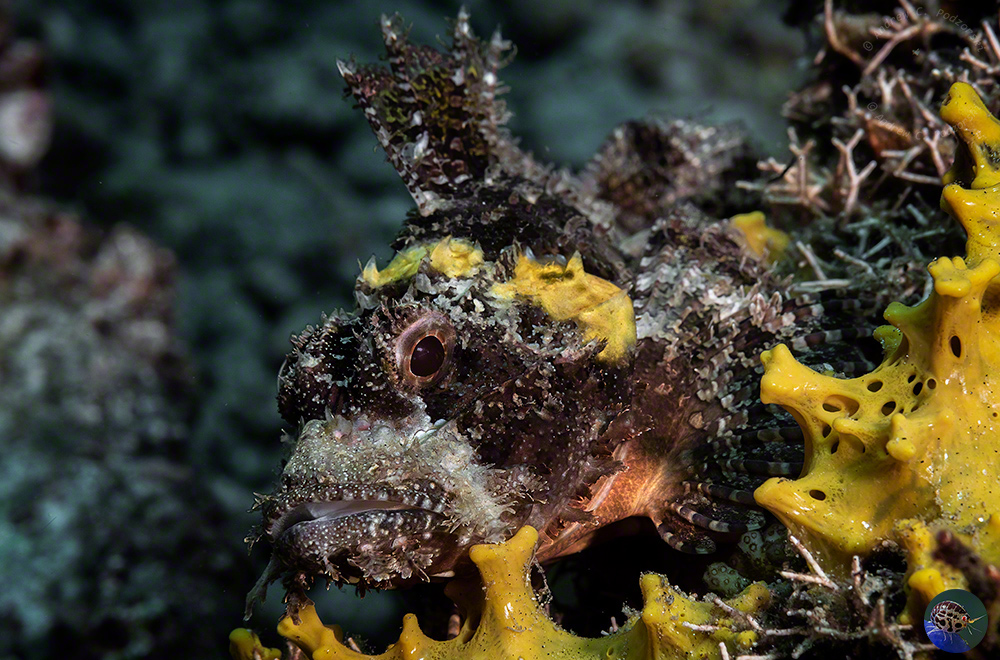
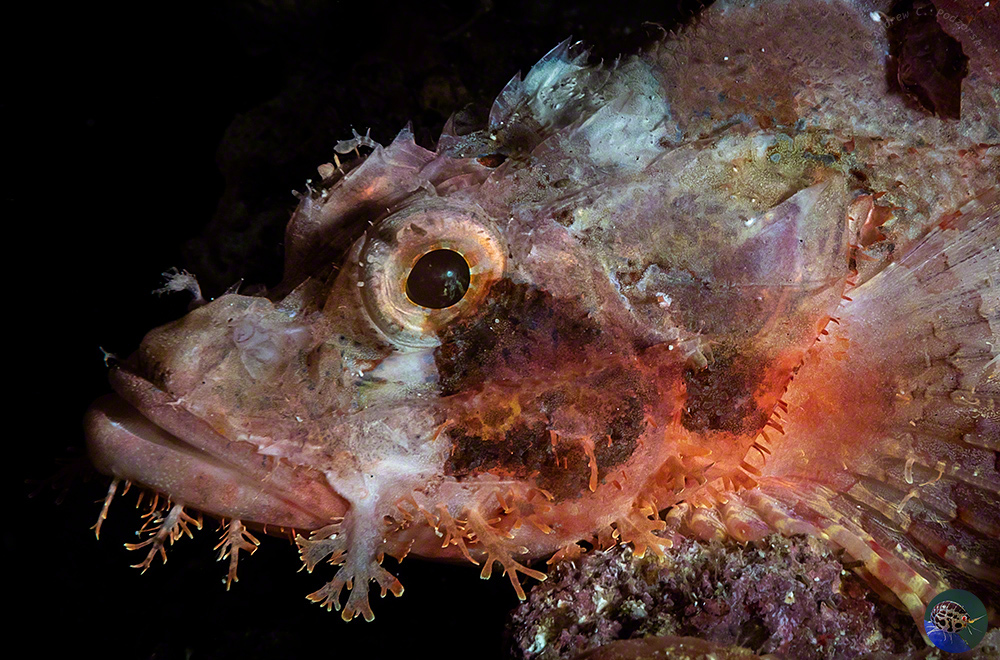
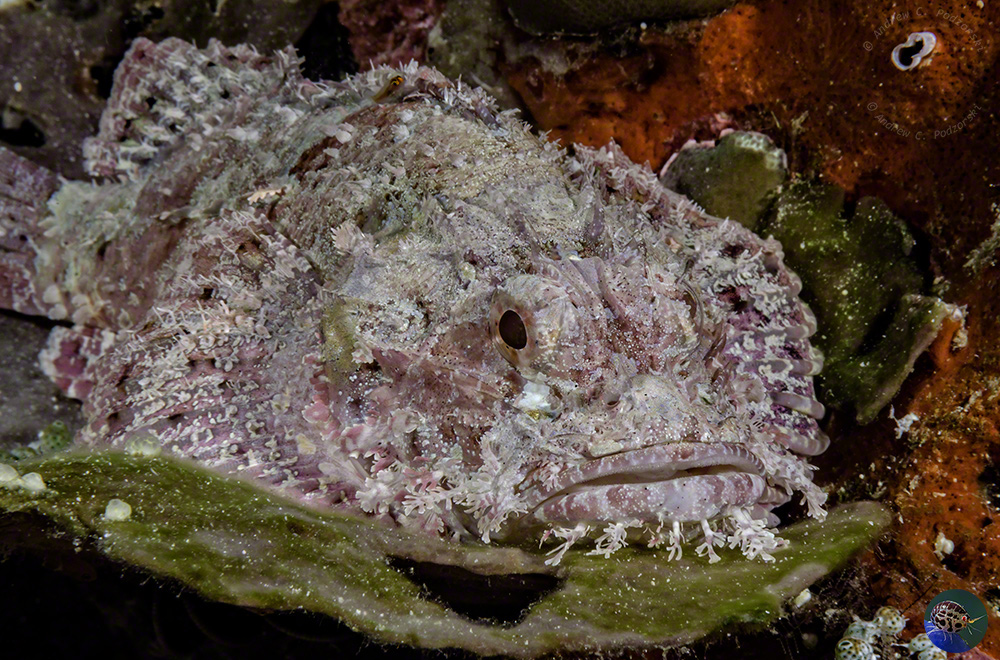
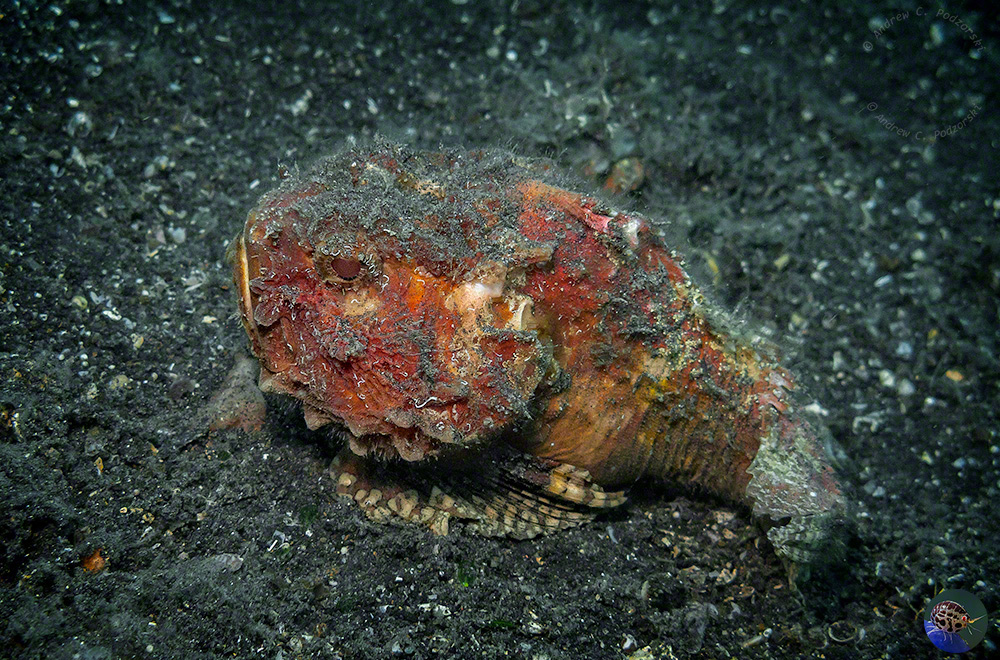
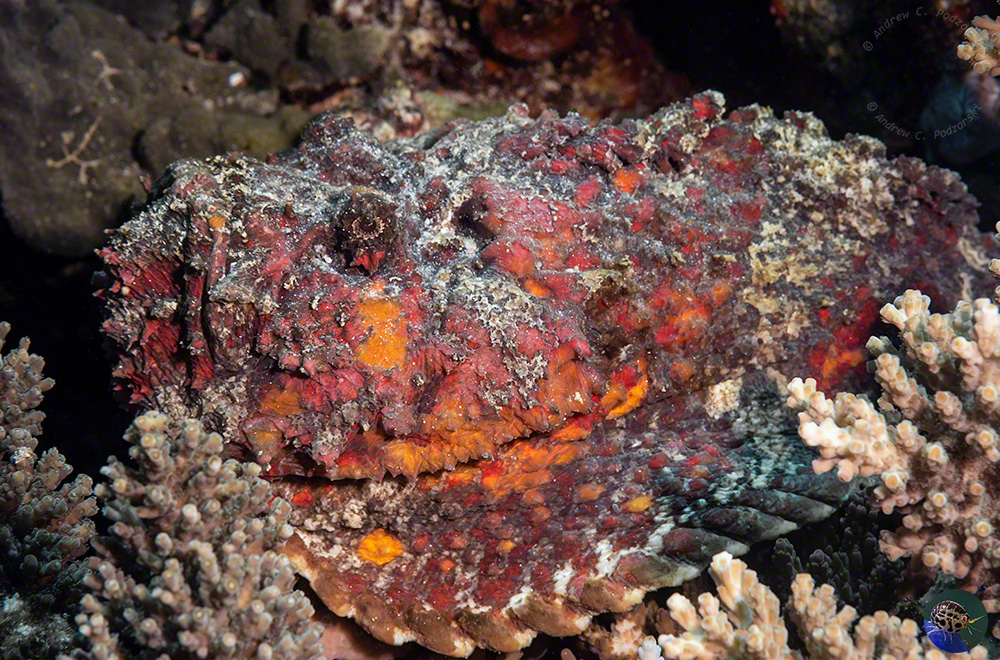
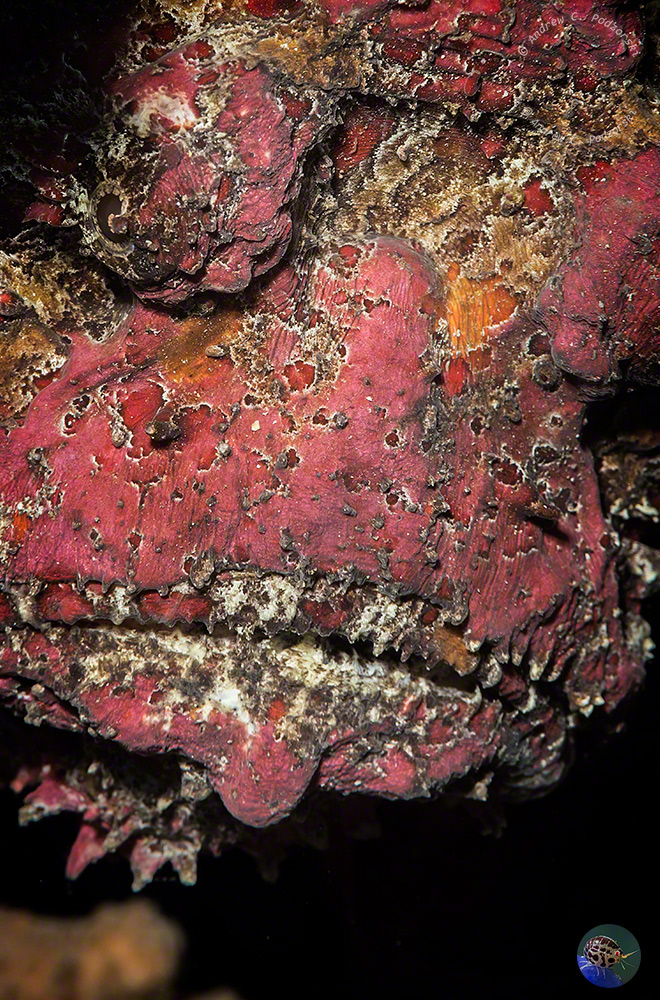
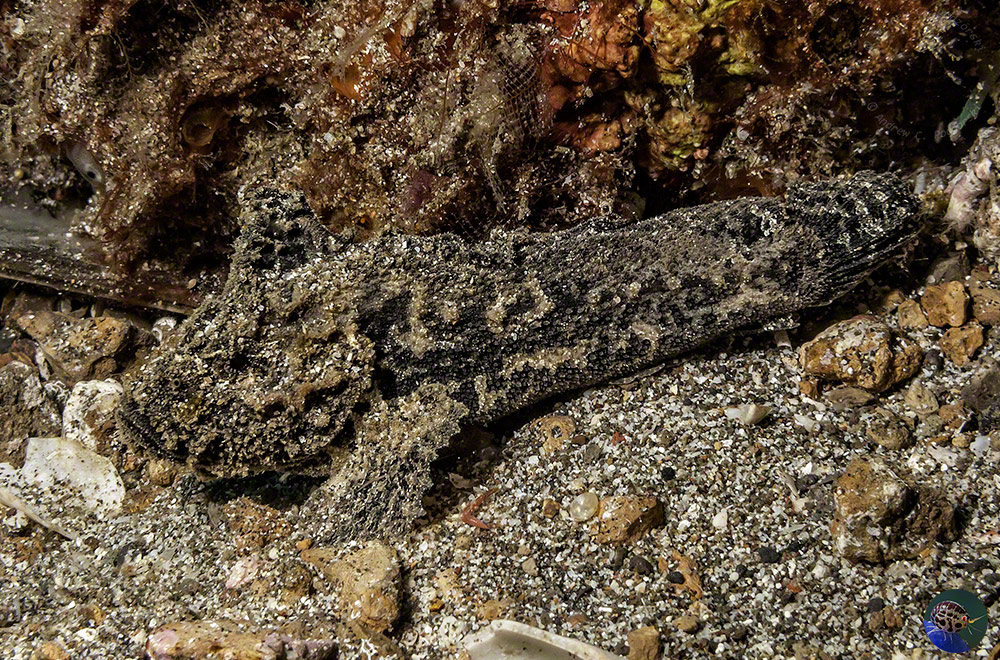
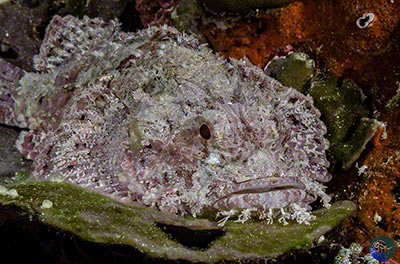
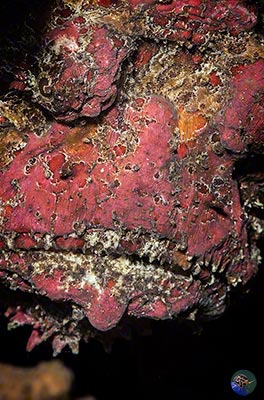
These are the most venemous fish in the sea, producing a potentially lethal neurotoxin from glands at the base of the dorsal fin spines. The fish are docile ambush predators, and the only way someone can be stung is to step or lean on one. Antivenom is available and heat applied to the puncture wounds will denature the neurotoxin. Medical treatment is essential.
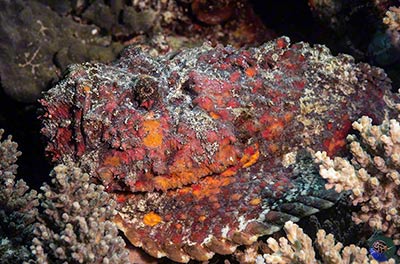
Experts at camouflage, a 50cm long Synanceia verrucosa lying in between coral is very difficult for a diver to make out even when someone points it out.
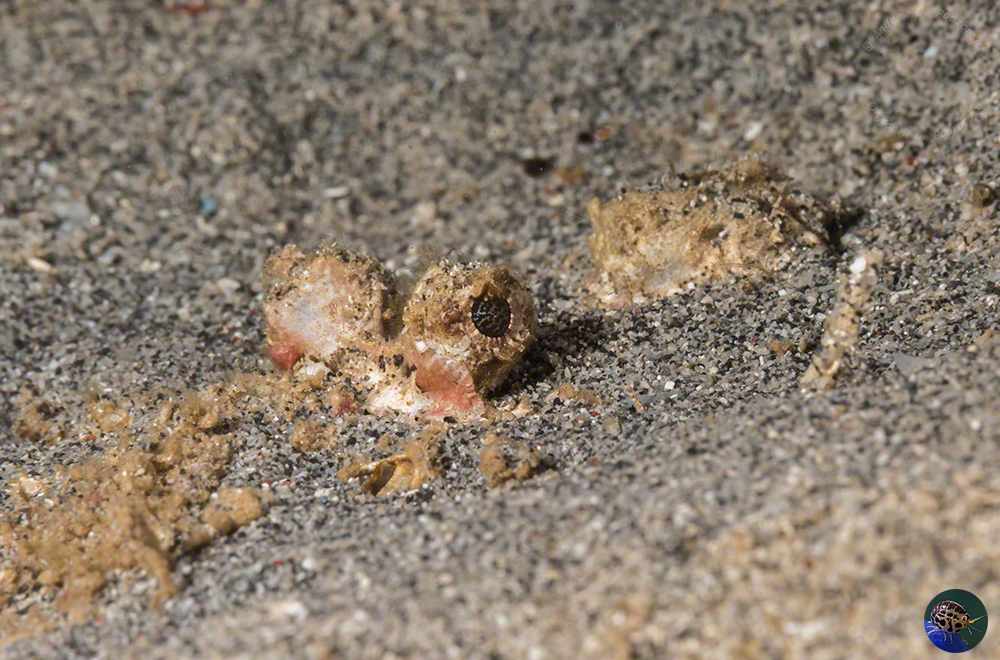
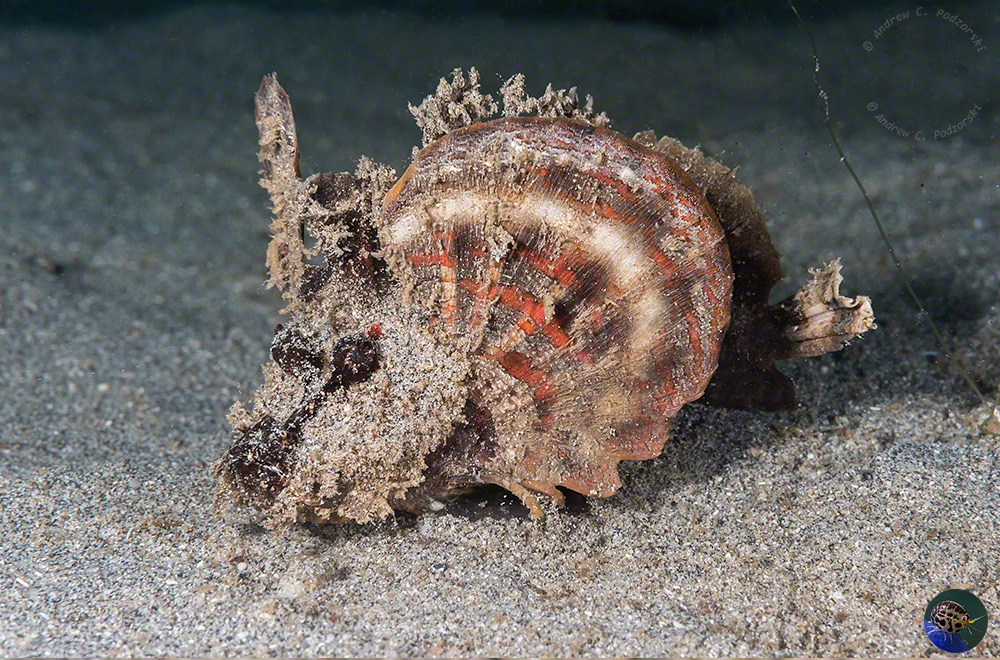
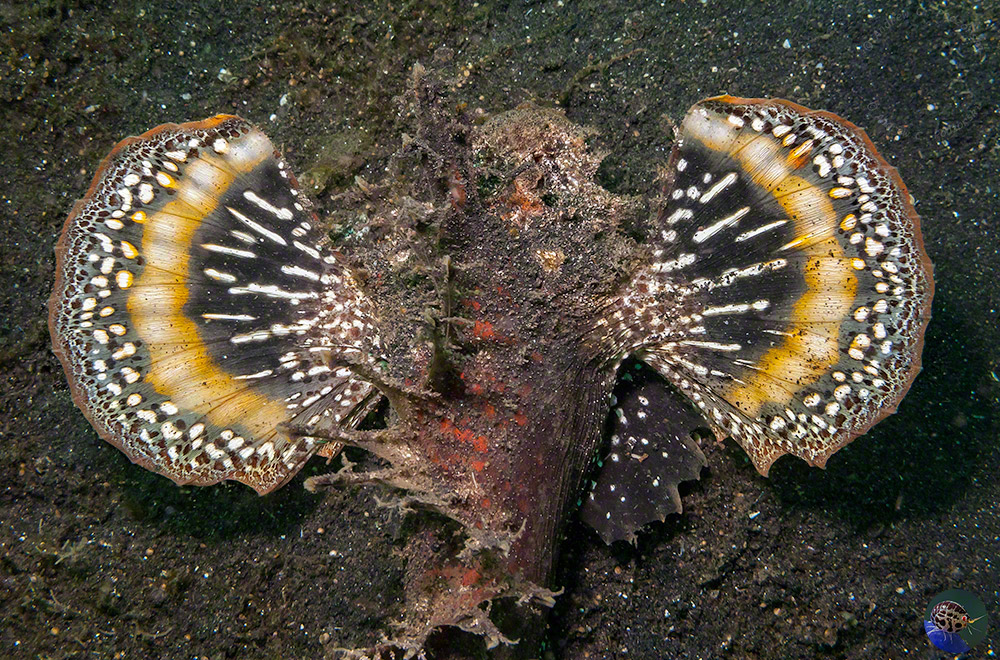
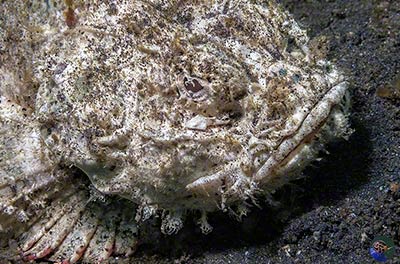
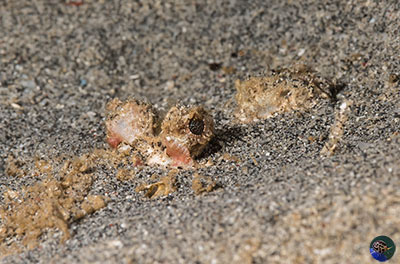
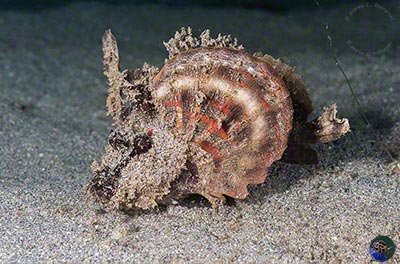
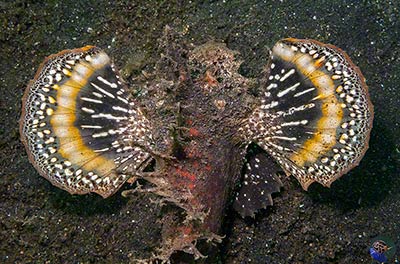
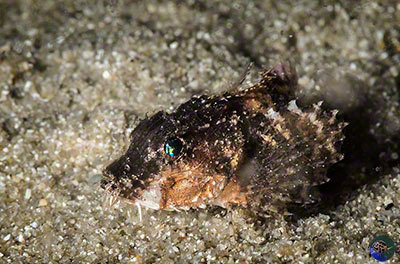
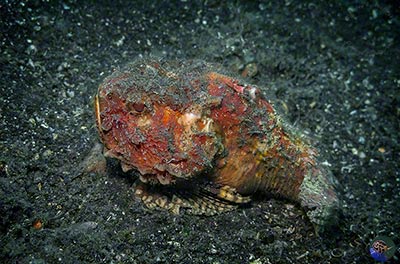
Inimicus is often burried under silt with its' dorsal fin folded down and only the eyes showing. If frightened, the long spines of its dorsal fin are suddenly erected and it "jumps" up out of hiding to drive the spines home into its attacker. This is one of many reasons why divers should never get close to silt and sandy surfaces!
Wasp- & Velvetfish
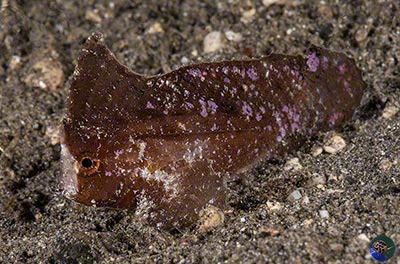
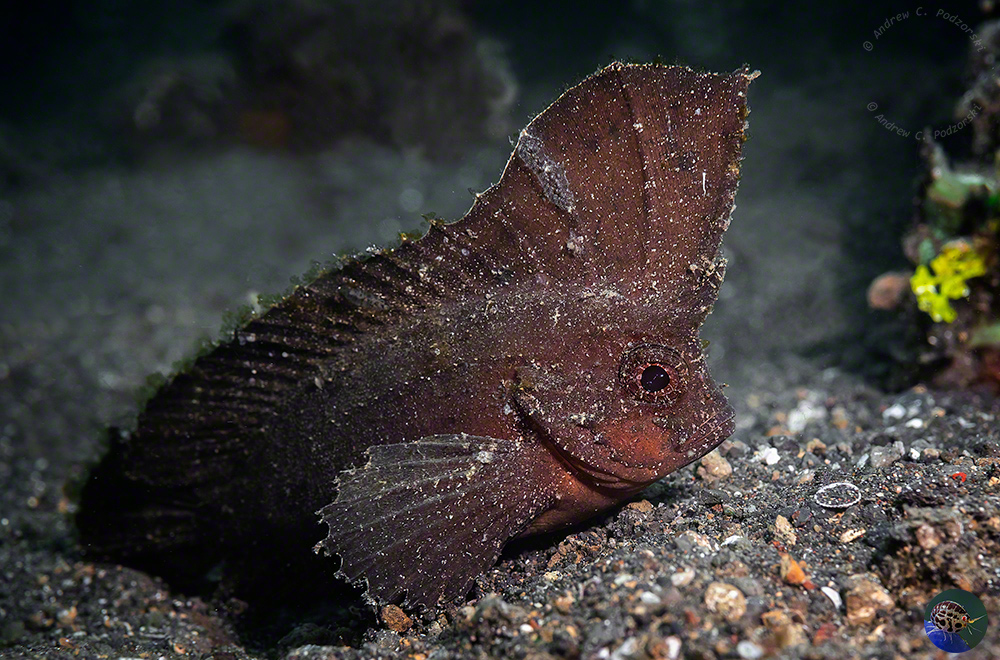
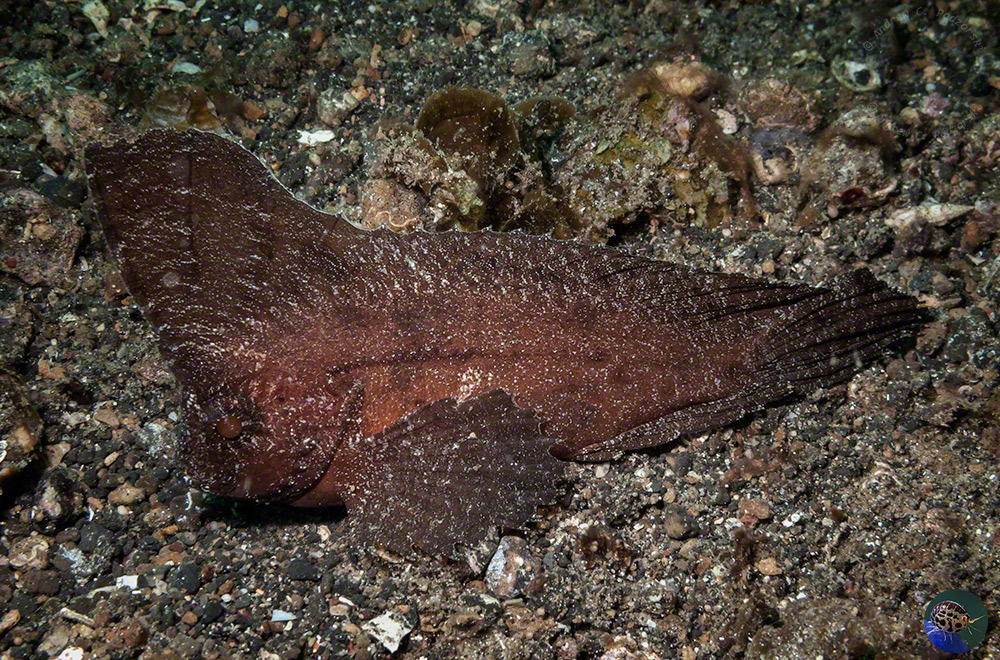
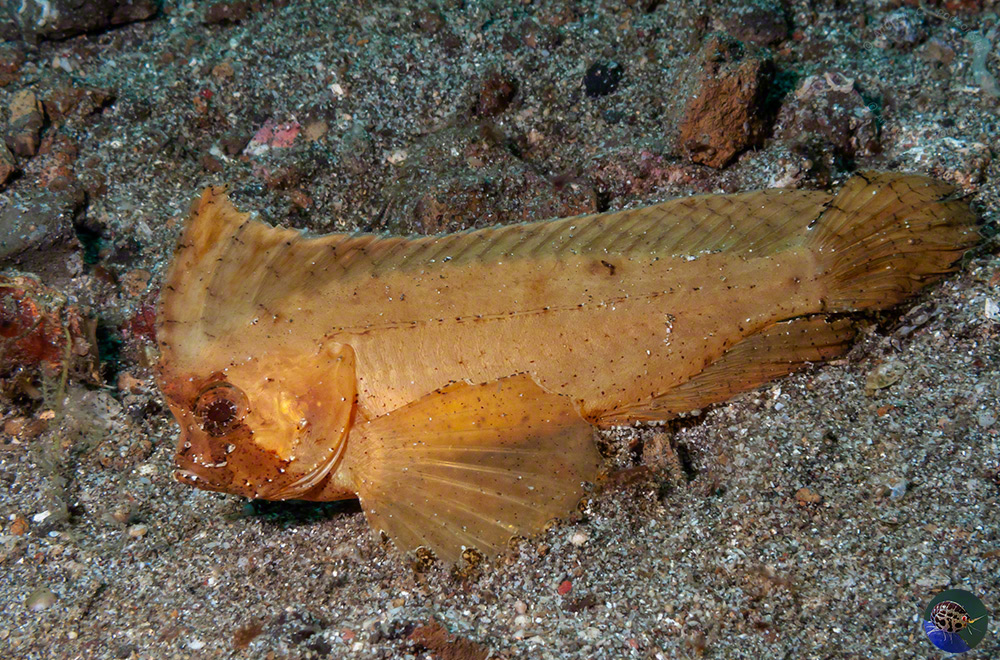
Waspfish are a small group of species spread over 17 genera. Ablabys flattened sideways as in Leaf Scorpionfish. Their behaviour is also similar in that they sway back and forth with the current, mimicing a dead leaf.
The Ocellated Waspfish (Apistus carinatus) are found mostly offshore on mud/sand bottoms, though in some locations (e.g. Lembeh) they come up to the deeper (25m) reef edge searching for food at night.
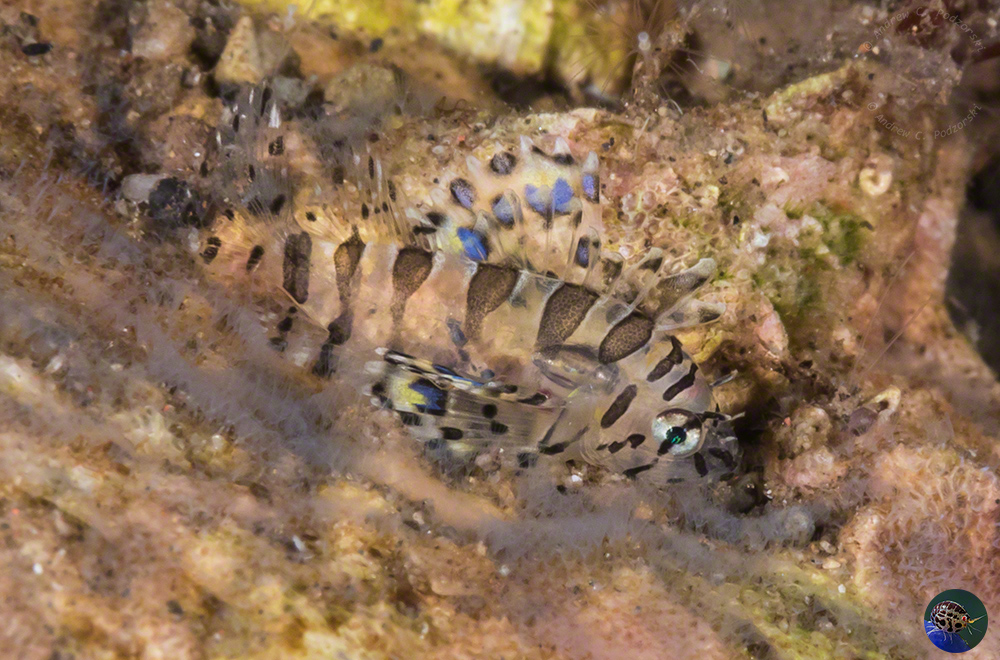
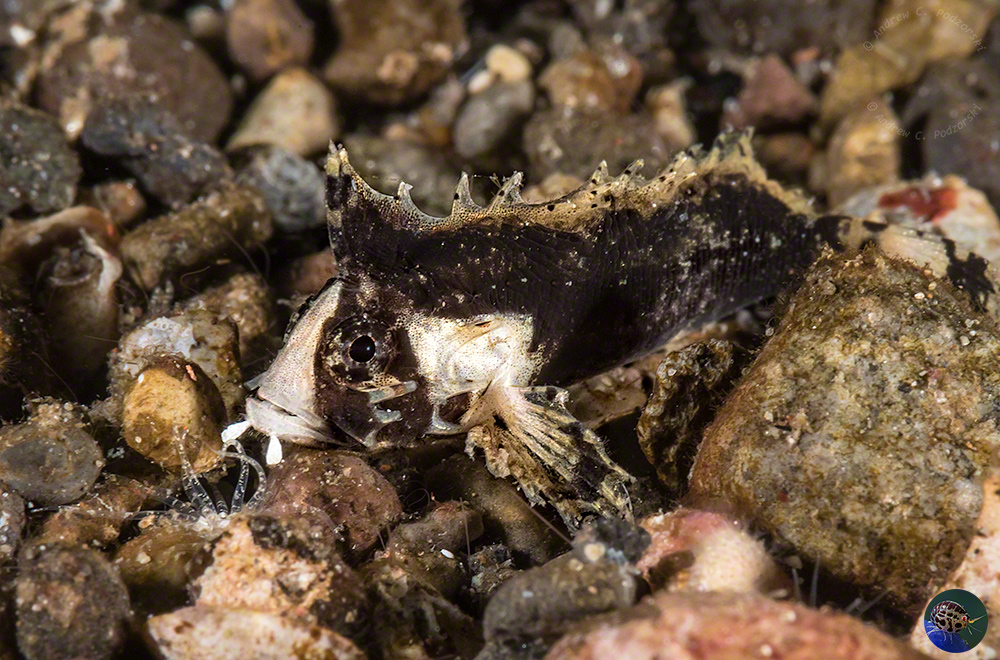
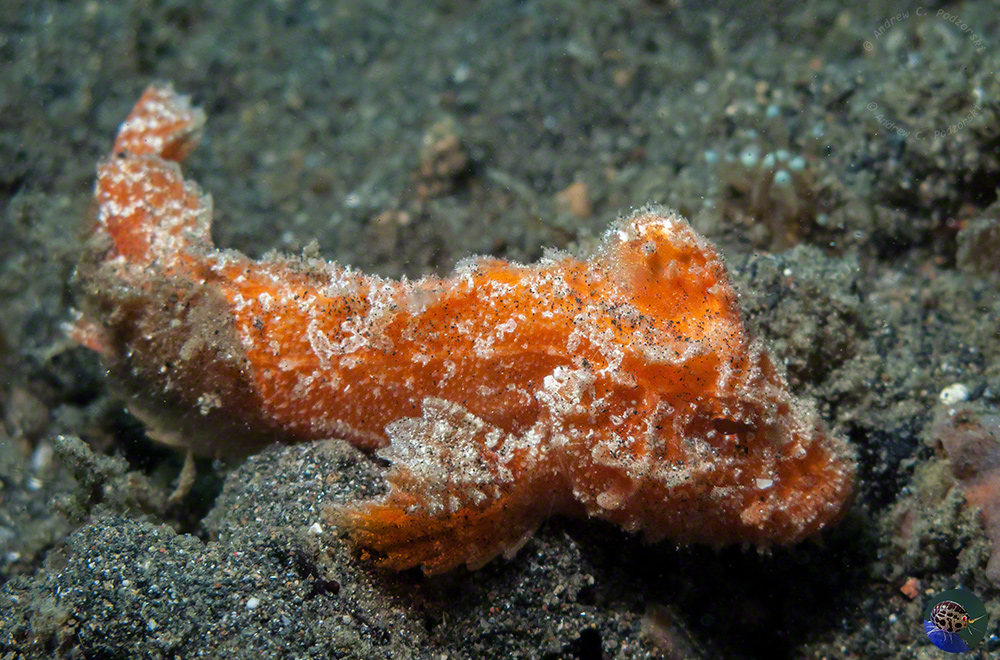
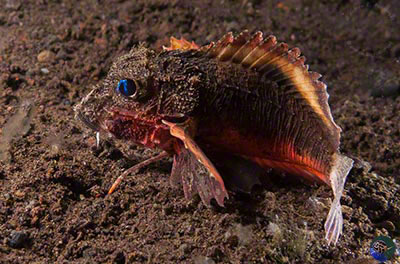
Velvetfish are small (2-5cm) relatives of scorpionfish. They mostly lack poisonous spines and their scales are replaced by microscopic bristles, giving their skin a texture that looks like velvet.
Helfen Sie, die Riffe zu retten!
Die Organisationen, die sich für den Schutz der Korallenriffe und unserer Ozeane einsetzen, brauchen so viel Unterstützung, wie sie bekommen können. Eine Auswahl:
Wenn Sie Taucher sind, und vor allem, wenn Sie Unterwasserfotograf sind, spenden Sie. Wenn Sie nichts tun, wird es nichts zum Tauchen und nichts zum Fotografieren geben.
Es handelt sich hierbei um Vorschläge, nicht um Bevorzugung der vorgeschlagenen Organisationen. Es liegt in Ihrer Verantwortung, die Wohltätigkeitsorganisationen, an die Sie spenden möchten, zu überprüfen und zu kontrollieren.
Rhinopias
Rhinopias
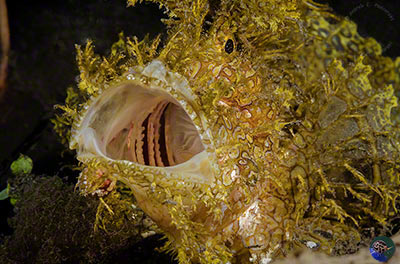
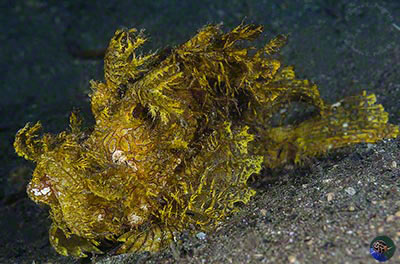
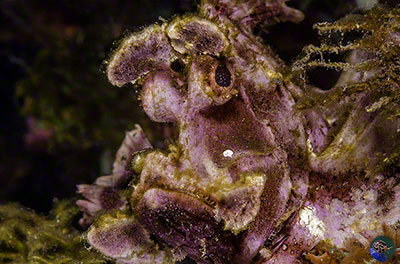
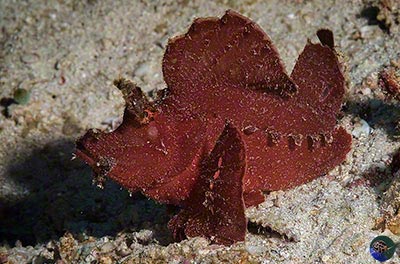
This spectacular genus belongs to the scorpionfish. They are very rarely seen partly due to their excellent camouflage, and their apparently patchy distribution. R. eschmeyeri and R. frondosa are the two species most likely to be seen.
The biggest danger for this genus comes from the aquarium trade. Their rarity and spectacular form makes them command huge prices. That they often stay in one place for a long time makes them an easy target for collectors. Local dive groups often report the disappearance of unusual specimens from marine parks. Occasionally the police or army catch the collectors, or divers recognise the specimens on the websites of the aquarium trade.


Lionfish
Lionfish
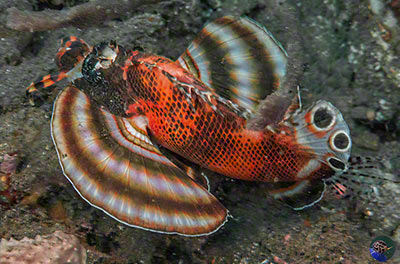
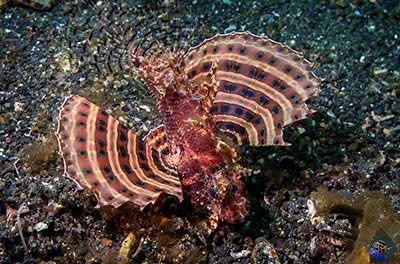
Lionfish have gained notoriety in recent years through their release on the east coast of the USA by irresponsible aquarium keepers. With no natural enemies, they have spread south and are all around the Caribbean. These voracious feeders have decimated native fish populations even to depths where they do occur in their native areas. They have also spread from the Red Sea to the Mediterranean through the Suez canal, and are now causing ecological issues there.
Pterois is the genus most often seen by casual divers. In some areas they can be a danger at night for a very special reason. Some divers enjoy shining their lights close to lionfish at night so they can watch them feed of the fish attracted by the light. The effect is that when lionfish have been conditioned in this way, they come to any diver with a light hoping for an easy feed. Areas where this has been practiced should be avoided at night.
Scorpionfish
Scorpionfish
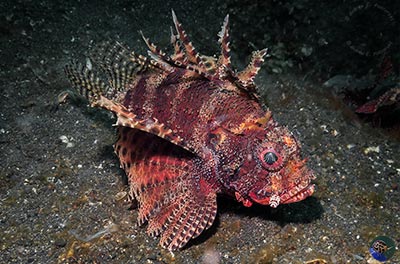
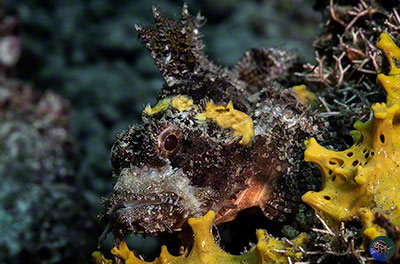
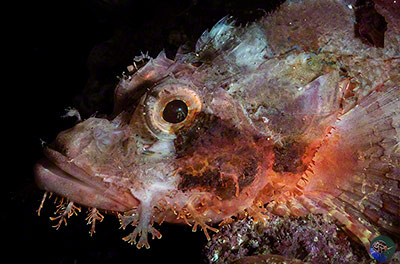
In contrast to stonefish, all the fin rays of scorpionfish are equipped with poisonous glands. The Tasseled Scorpoinfish (Scorpaenopsis oxycephala) has the camouflage advantage that it can quickly change colour to match its' background.
Ambon Scorpionfish (Pteroidichthys amboinensis) lok a little similare to weed scorpionfish. They are smaller, often brown and covered in algae, but sometimes light or dark red specimens can be seen.
Leaf Scorpionfish (Taenianotus triacanthus) have a wide colour variation, and pairs can be seen where one is pink and the other yellow or white. They lie upright and sway gentily from side to side, imitating a leaf. The body is very thin as can be seen from the images.
Centrogenys vaigiensis is included here as it mimics scopionfish so well. In reality, it belongs the grouper family.
Stonefish
Stonefish
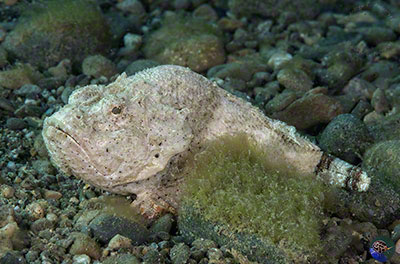
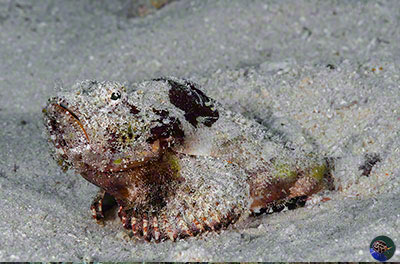
These are the most venemous fish in the sea, producing a potentially lethal neurotoxin from glands at the base of the dorsal fin spines. The fish are docile ambush predators, and the only way someone can be stung is to step or lean on one. Antivenom is available and heat applied to the puncture wounds will denature the neurotoxin. Medical treatment is essential.
Experts at camouflage, a 50cm long Synanceia verrucosa lying in between coral is very difficult for a diver to make out even when someone points it out.
Inimicus is often burried under silt with its' dorsal fin folded down and only the eyes showing. If frightened, the long spines of its dorsal fin are suddenly erected and it "jumps" up out of hiding to drive the spines home into its attacker. This is one of many reasons why divers should never get close to silt and sandy surfaces!
Wasp- & Velvetfish
Wasp- & Velvetfish
Waspfish are a small group of species spread over 17 genera. Ablabys flattened sideways as in Leaf Scorpionfish. Their behaviour is also similar in that they sway back and forth with the current, mimicing a dead leaf.
The Ocellated Waspfish (Apistus carinatus) are found mostly offshore on mud/sand bottoms, though in some locations (e.g. Lembeh) they come up to the deeper (25m) reef edge searching for food at night.
Velvetfish are small (2-5cm) relatives of scorpionfish. They mostly lack poisonous spines and their scales are replaced by microscopic bristles, giving their skin a texture that looks like velvet.